

Durango’s first electrical power plant opened in January 1887 on the north side of today’s 7th Street near the railroad tracks. It supplied power to the smelters during the day. Homeowners could sign up for evening electrical service, paying a set amount in advance. By 1893 the plant was unable to meet demand and a new plant was built at 14th Street and today’s Camino del Rio. This coal burning plant provided steam driven electrical power for commercial and residential use, as well as street lights. In 1909 Durango began receiving additional power from the hydroelectric plant at Tacoma located north of Durango. Learn more about the history of electricity in Durango here.
In the 1930s both plants were operated by Western Colorado Power Company. The company’s five steam plants and seven hydropower plants provided electricity to 23 communities, rural areas and mines making it a major western slope employer.
President Franklin Roosevelt created the Rural Electrification Administration (REA) in 1935 to create jobs and bring electricity to rural areas and farms. By 1935 nearly 70% of American homes were connected to the electrical grid.

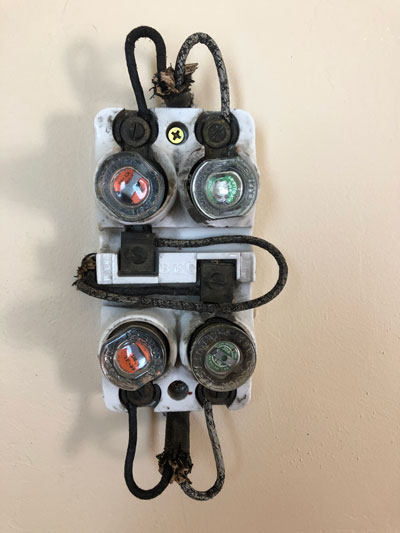
Between 1890 and 1910, a wiring system known as knob-and-tube was used in buildings. It was a dependable system for the time, and can still be found in older homes, often alongside modern updates. In knob-and-tube wiring, individually conducting wires protected by rubberized cloth fabric were installed in wall spaces, held in place by porcelain knob insulators and protected by porcelain tube insulators where the wires run through framing boards. In the 1930s non-metallic sheathed cable came into use which contained both wires in a rubberized fabric coated cover. Evidence of this type of wiring was found in this house.

The 1930s brought many labor-saving appliances into the home. Electric stoves ended the need to haul coal or wood and tend a fire. Washing machines, wringers and lighter weight irons lessened the drudgery of laundry day. Electric toasters and waffle irons helped start the day. While refrigerators were available, electricity could be expensive or unreliable so many homemakers continued to use ice boxes to keep the new varieties of food cool. Electricity in the home also brought entertainment, powering radios and enabling families to read, play and work on hobbies after the sun went down.
