

 The first radio broadcasts in the United States started in the 1920s even though at the time, few homes had radio sets. By 1930, 40 percent of American homes boasted a radio and that number doubled by the end of the decade. After the initial investment to purchase a set, radios provided a free stream of entertainment. On average, Americans listened to the radio 4 hours a day. Music, news and radio shows provided a much-needed distraction. The entire nation from big cities to remote farms were connected in real time, creating a new sense of community.
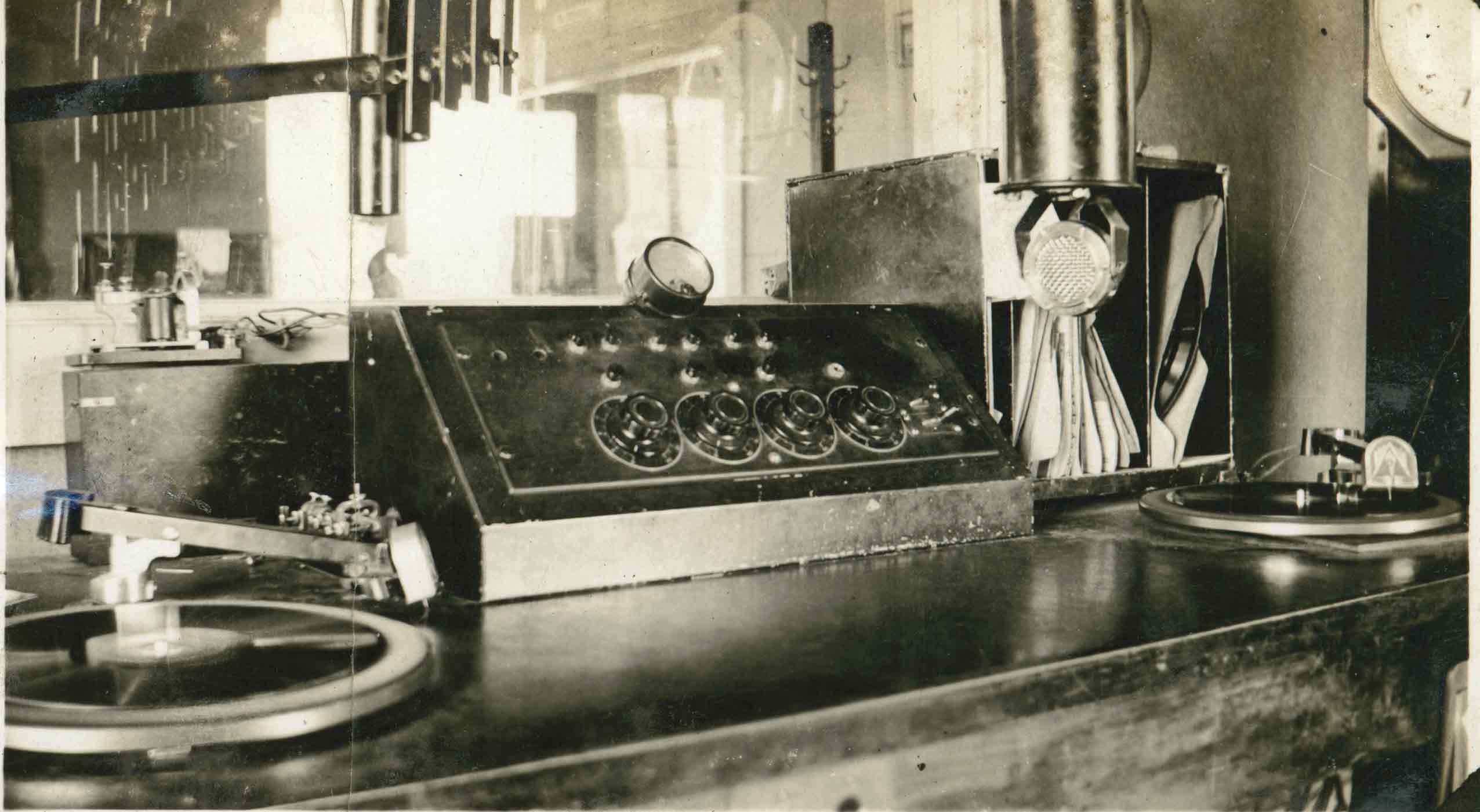
The image above (catalog number 03.40.43) shows the mixer console at local radio station KIUP in 1936. KIUP began broadcasting in Durango on December 10, 1935.
President Franklin Roosevelt understood the power of radio. His Fireside Chats, the first of which aired on March 12, 1933, helped to turn the tide of the Great Depression. More than 60 million people listened to that broadcast. The radio in the 1930s paved the way for television and the Internet to connect people around the world in real time.
Popular Radio Shows:
- Little Orphan Annie
- Jack Benny
- Burns and Allen
- Dick Tracy
- Fibber McGee and Molly
- The Lone Ranger
- Edgar Bergen and Charlie McCarthy
- Buck Rogers
- The Shadow
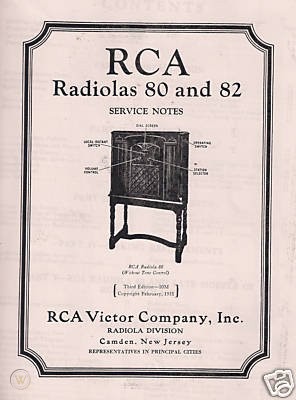
RCA Radiola 80 Radio
RCA (Radio Corporation of America) released patents for the superheterodyne radio receiver in 1930 which greatly increased the quality of radios available on the market. The superheterodyne receiver mixes frequencies to convert a broadcast signal to an intermediate frequency that can be easily processed for better listening quality within the set itself. This RCA Radiola 80 was “state of the art” in 1931 when Jake McJunkin purchased it from Wright’s Electric Shop in Ignacio to listen to Denver’s radio station KOA at noon every day. It has 9 tubes installed on two chassis. Photographs of each and the schematic shown below are from the November 1930 issue of “Radio News”.
