

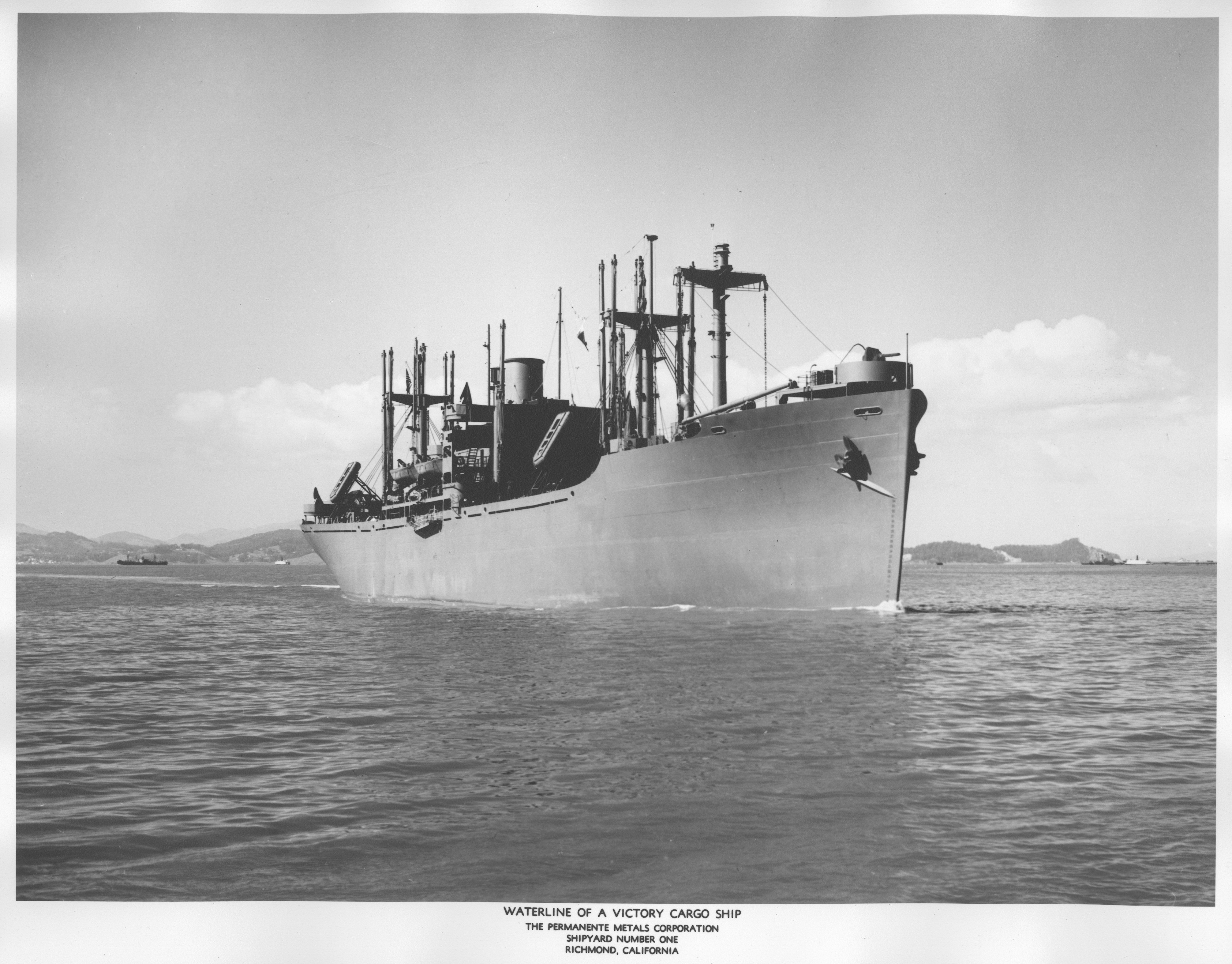
Waterline of a Victory cargo ship. Catalog number: 90.17.122.26
While many Rosies like Anne Wise Isgar, built airplanes, many others were employed to build ships. The Emergency Shipbuilding Program, started in January of 1941, called for the rapid construction of ships to be used primarily for cargo and troop transport. Shipbuilding had traditionally been an occupation only open to men; the needs of the war provided job opportunities for women in shipyards. While there was more welding than riveting going on in the building of Liberty and Victory class cargo ships, Rosies guaranteed the success of the program.
Liberty ships were the first class of cargo ships to built under the Emergency Shipbuilding Program. In 1943, a new, faster cargo vessel design was adapted, the VC2 or Victory Cargo 2 class. Victory ships were around 455 feet long and 62 feet wide and carried a slightly larger load than the Liberty class. A steam turbine engine propelled them to a speed of 15-17 knots or about 18.5 miles per hour.

Steel prow of the S.S. Durango Victory. Catalog number: 90.17.122.2
An American industrialist, Henry Kaiser turned his skills to building these cargo ships. He opened the Kaiser Shipyard in Richmond, California in the early 1940s and developed innovative manufacturing techniques using a largely female workforce to speed up the production of Liberty and Victory ships. Kaiser offered amenities such as 24 hour on-site child care for the Rosies employed there. One of the Victory ships produced by Rosies at this shipyard was the S.S. Durango Victory, launched in December 1944. Victory ships were often named after cities in the United States that successfully sold war bonds and Durango was proud to have such an honor. The S.S. Durango Victory was scrapped in 1994.
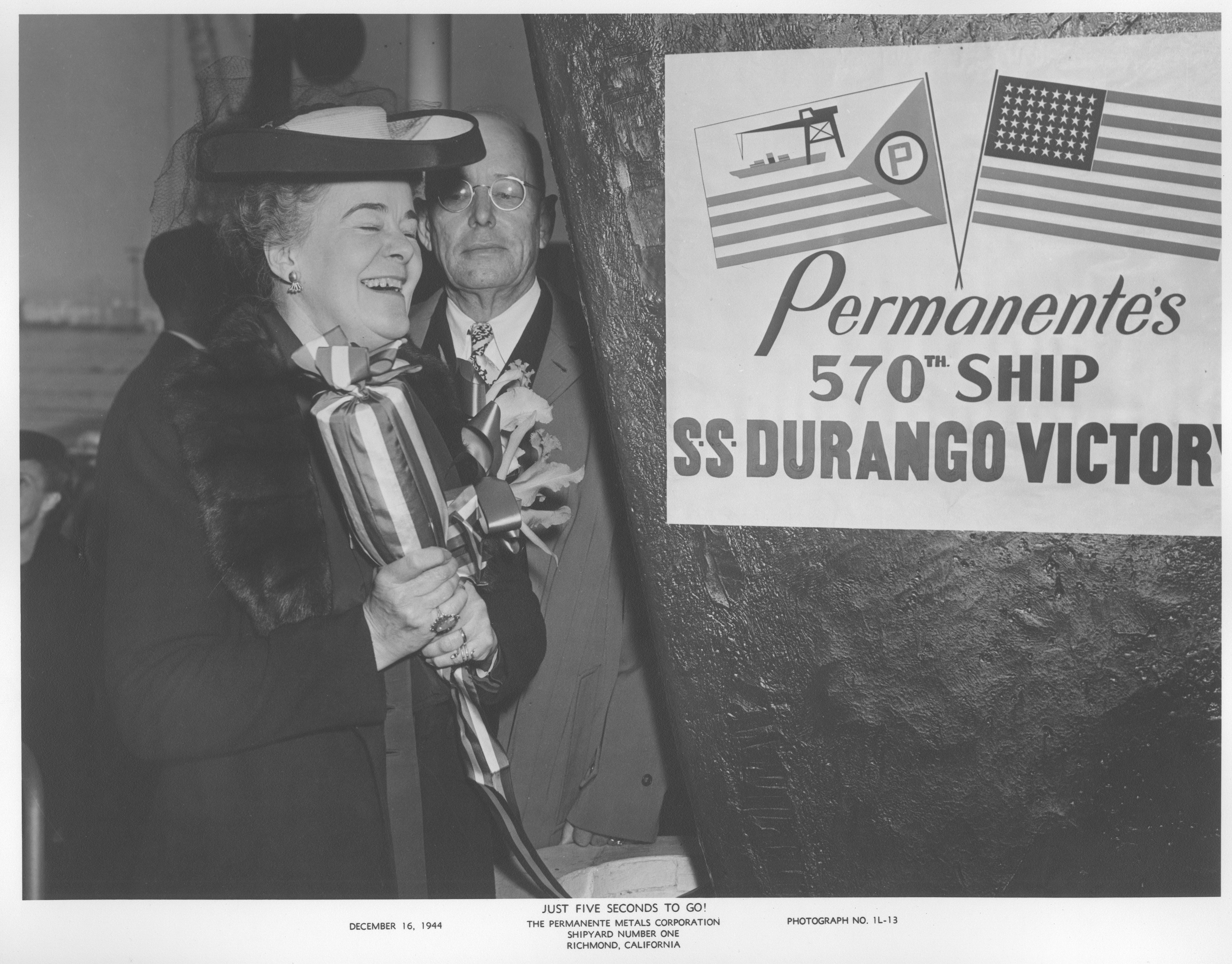
Ella Jackson Birkhimer christening the S.S. Durango Victory. Catalog number: 90.17.122.12
Ella Jackson Birkhimer happened to be living in San Diego in 1944 when the S.S. Durango Victory was launched. She was invited to christen the ship. Ella was born in Durango to Harry and Louisa Jackson in 1885. Growing up, she helped her father by working in his store, Jackson Hardware. She was a businesswoman in Durango, running a popular ladies clothing store in Durango. In her 50s during the war, Ella was perhaps too old to be a Rosie, but understood that women could do their part for the war effort.
Visit the Animas Museum in the summer of 2024 to learn more about Durango and La Plata County's role in World War II.