

The 19th Amendment Was an Incomplete Victory
A bill for amending the Constitution and giving women the vote passed both chambers of Congress in 1919. The suffragists finally triumphed in August 1920 when 36 states--the necessary three-fourths of the country's 48 states--voted to ratify it:
"The right of citizens of the United States to vote shall not be denied or abridged by the United States or by any State on account of sex."
But the passage of the 19th Amendment was not a final triumph for Americans' right to vote. Racist laws still blocked many people of color from voting and kept Native Americans and Asian immigrants from becoming citizens. The true conclusion to the 19th Amendment was the 1965 Voting Rights Act, protecting the vote for all Americans.
Top Image:
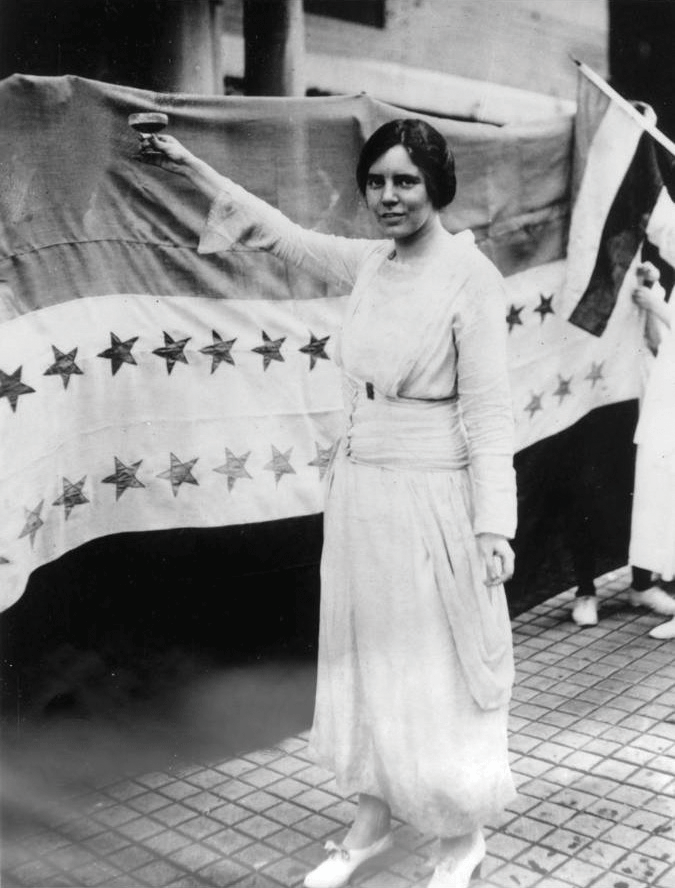
Alice Paul Raises a Glass, August 26, 1920. Alice Paul, founder ofthe National Woman’s Party, toasts the ratification of the 19th Amendment. Tennessee had just become the 36th state to ratify the amendment (by one vote). Alice Paul wears white, symbolic of the movement. Gelatin silver print. Courtesy of National Woman’s Party, Washington, D.C.
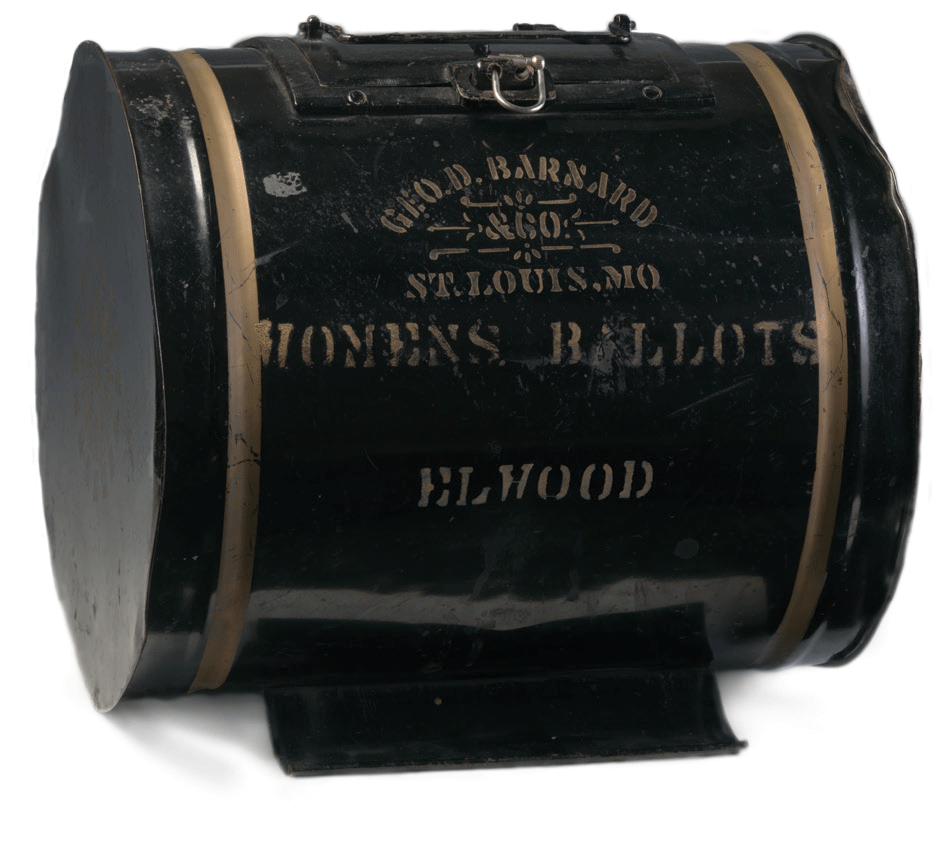
Women’s Ballot Box, Indiana, 1870–1892 Some states let women vote for the school board, but not for political offices representing the public. To keep women from voting in restricted races, polling places used separate boxes for women’s votes. In 1917 Indiana women enjoyed a four-month period in which they could vote in any election. Then the law was repealed. Courtesy of Ronnie Lapinsky Sax
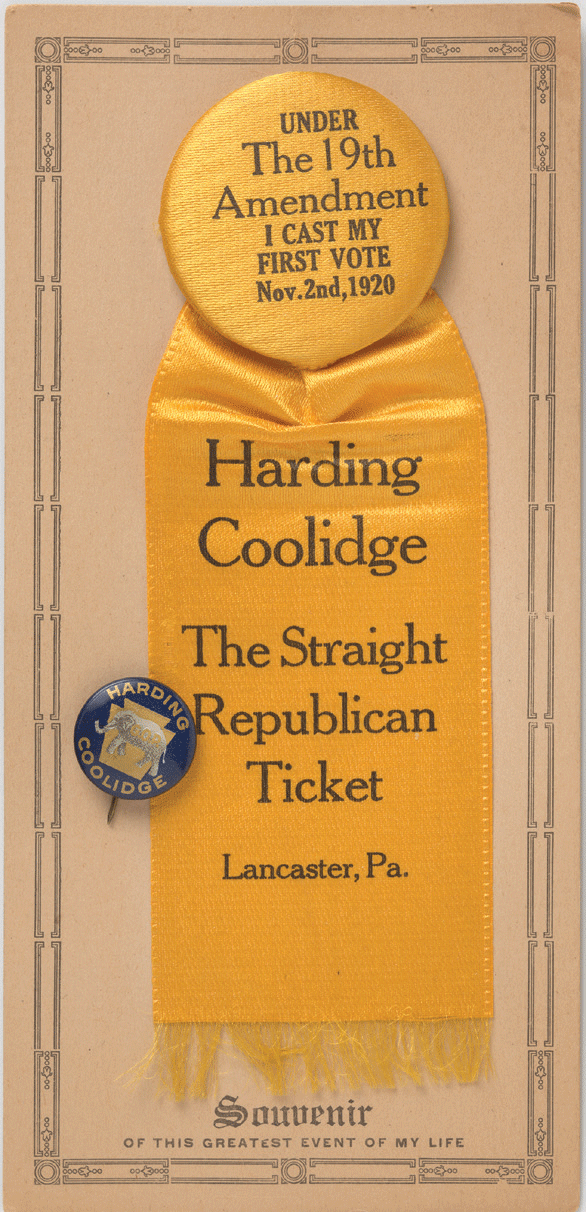
“First Vote” Ribbon, 1920 As 1920 was a presidential election year, the Republican Party recruited new voters from the pool of recently enfranchised women. Courtesy of Ronnie Lapinsky Sax
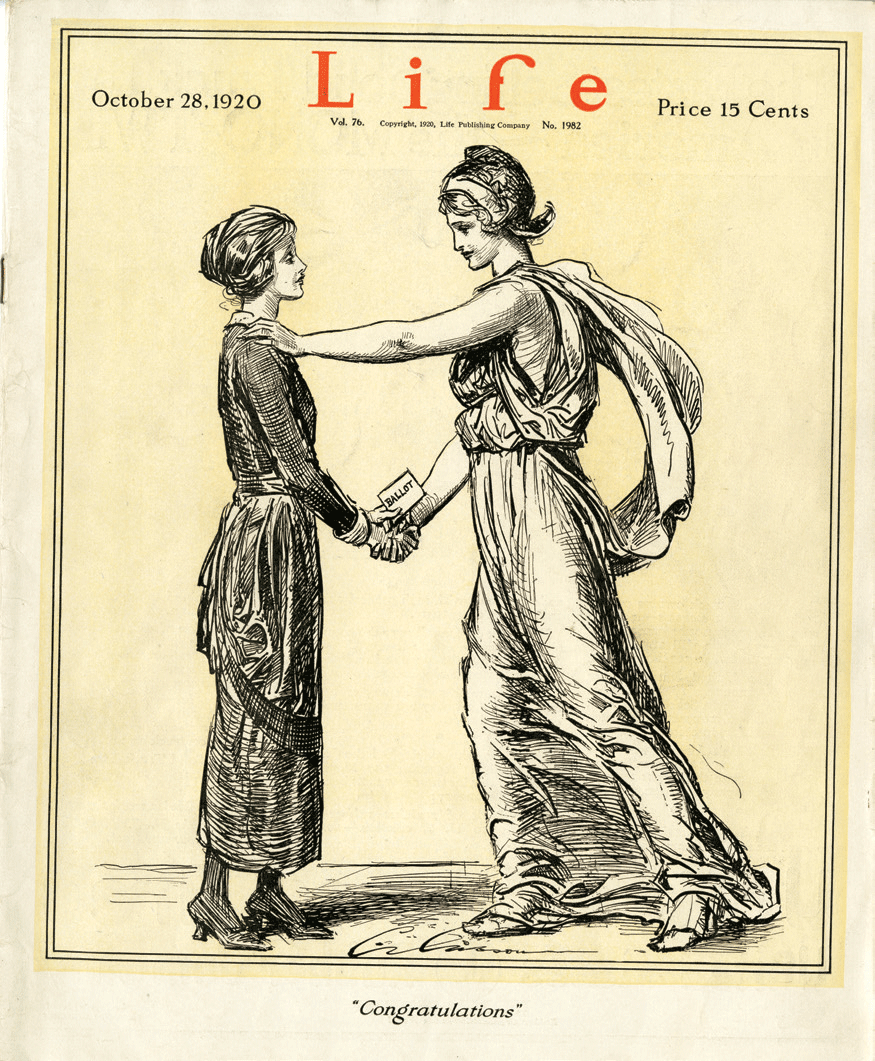
Congratulations, 1920 A suffragist shakes hands with Columbia, the allegorical symbol of the United States, who hands her a ballot. Illustration by Charles Dana Gibson Life magazine cover, October 28, 1920 Courtesy of Ann Lewis and Mike Sponder
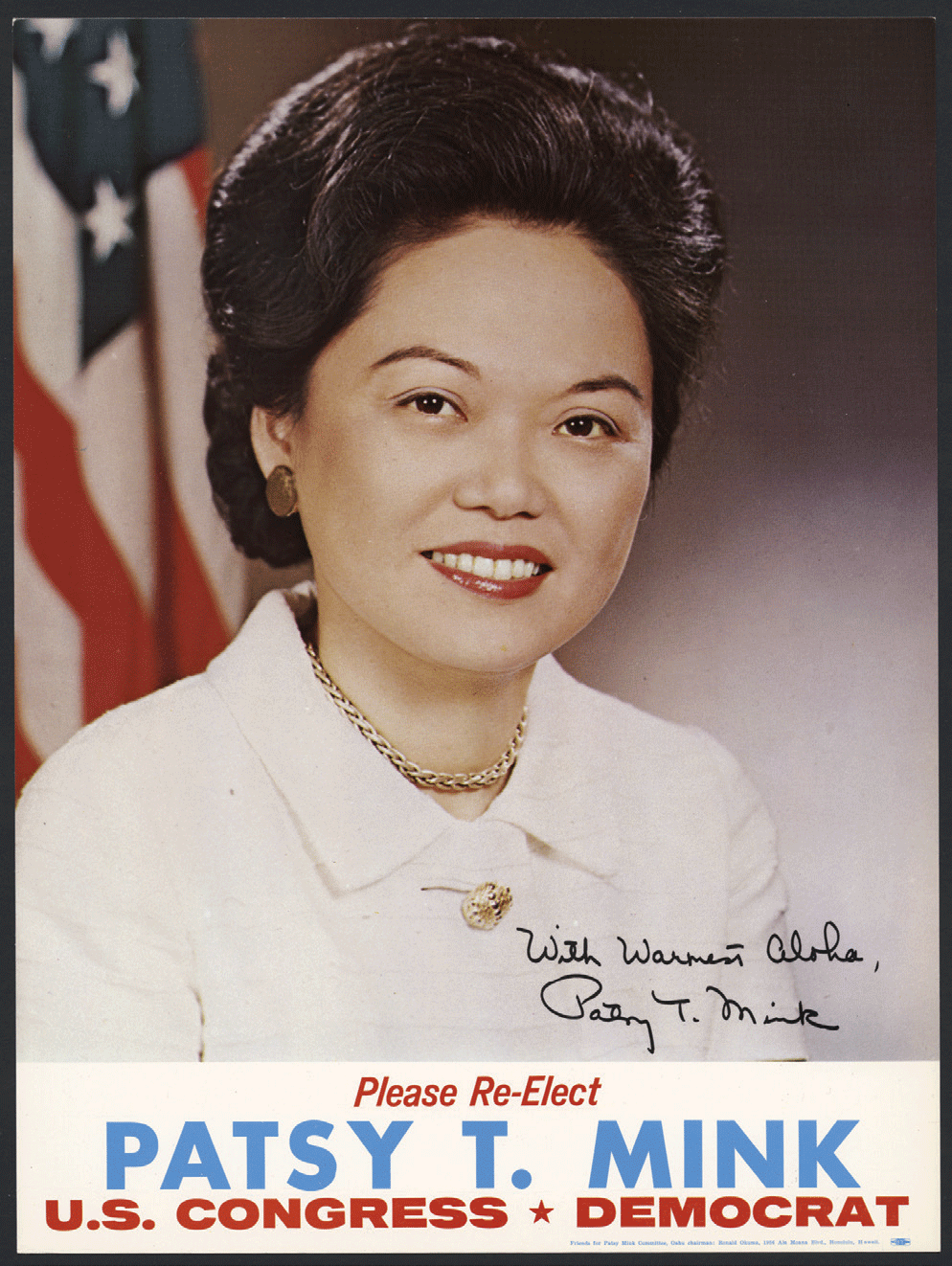
In 1965 Patsy Takemoto Mink (1927– 2002) —a Japanese American from Hawaii— became the first woman of color elected to Congress. She helped to shape the Voting Rights Act and facilitated Title IX legislation, prohibiting gender discrimination in federally funded schools. Election poster, photographer unknown, c. 1970 Courtesy of the U.S. House of Representatives
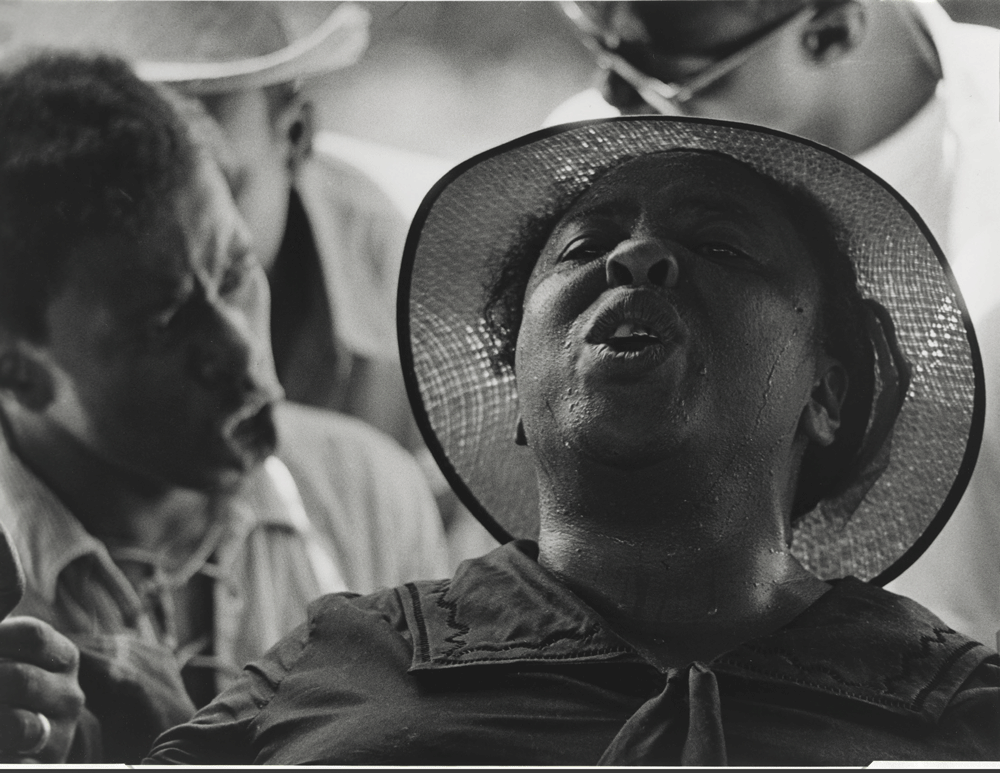
In 1962, when Fannie Lou Hamer (1917– 1977) tried to register to vote, she was denied on the grounds that she was illiterate. Though the 19th Amendment barred sex as a reason for restricting political rights, racists created barriers to voting like literacy tests and poll taxes. Hamer founded the Mississippi Freedom Democratic Party in 1964 and is pictured here in the March Against Fear, when she walked from Memphis, Tennessee, to Jackson, Mississippi, to draw attention to Black citizenship rights. Gelatin silver print by Charmian Reading, 1966 Courtesy of National Portrait Gallery, Smithsonian Institution, ©Family of Charmian Reading