
World War I in La Plata County
The Homefront
Book Burning
The Homefront
Book Burning
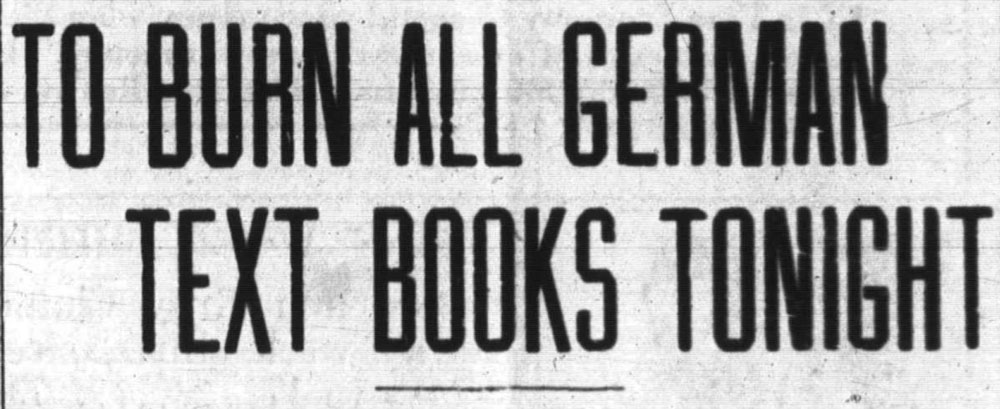
With America at war, sentiments against the German enemy reached a fever pitch. As did most communities, Durango eliminated teaching the German language in schools. With no need for German texts, it was determined to burn them. On June 29, 1918 German books, articles, papers, and letters were rounded up from all over town and gathered into a pile at a vacant lot at the corner of 11th Street and 2nd Avenue, north of the courthouse. They were covered with oil soaked timber and topped with an effigy of the Kaiser, complete with a tin helmet. A crowd of several hundred gathered as the band played “There’ll Be a Hot Time in the Old Town Tonight”. City and county officials were present, as were police and the Fire Department. The band struck up “Hail, Hail, the Gang’s All Here” as a match was applied to the pile. The Durango Democrat noted there had been talk that Durango was “slipshod in handling pro-hun activities”. The book burning was said to show “people in the San Juan Basin are red-blooded and true Americans.”
Liberty Bonds
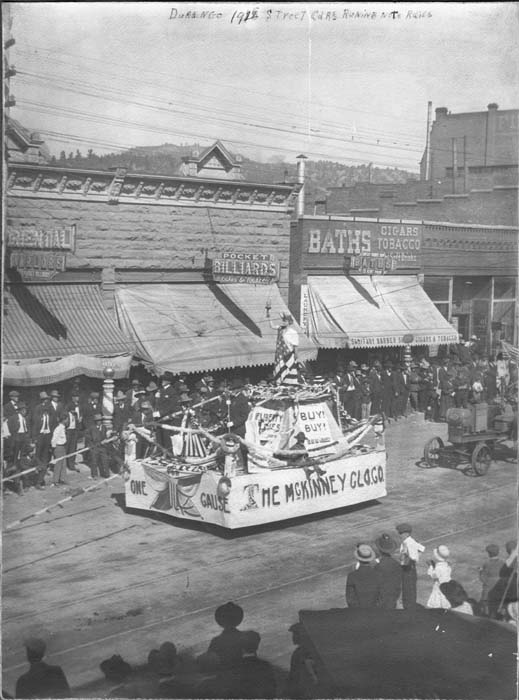
In 1917, to cover the expenses of the war and to involve all Americans in supporting the fight, the U.S. Treasury first issued Liberty Bonds. These were available in denominations as low as $50. Since that was still a lot of money for many Americans, War Savings Stamps and Certificates were also sold. Stamps cost $.25 each and could be collected and then exchanged for $5 savings certificates. At first, Liberty Bonds only returned 3.5%, so few Americans invested in them. The government ran massive publicity campaigns to encourage people to buy Liberty Bonds and raised the rate of return to 4%. Rallies were held, posters appeared everywhere and counties were given quotas of numbers of bonds to sell as Americans were told “If you can’t enlist - invest!” La Plata County was one of the few counties that met their quotas early and then pledged more than their quota.
Ultimately, over half of all Americans purchased over $18 billion in bonds which paid for the massive troop deployments and supplies which became a symbol of patriotic duty.