

Ironing
If the weather was good and the clothes hung out on Mondays were dry, Tuesdays were for ironing the wrinkles out of the newly cleaned fabrics.
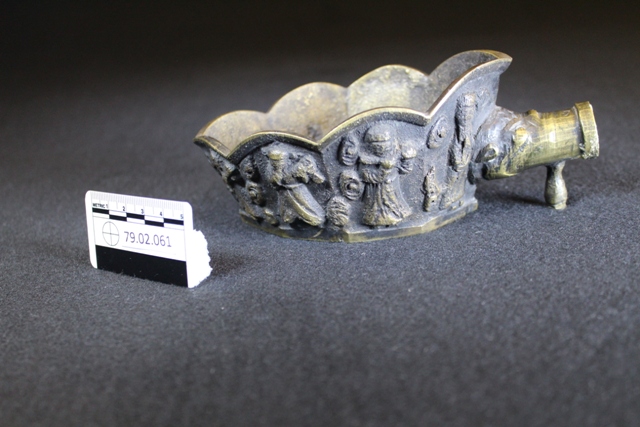
Nearly 2000 years ago, the Chinese found that by heating smooth, heavy objects, wrinkles could be removed from textiles. Their irons developed differently than European irons, and some that may have been brought to Durango by Chinese immigrants are included in the Animas Museum’s collection as seen in the image below, catalog number 79.2.61.
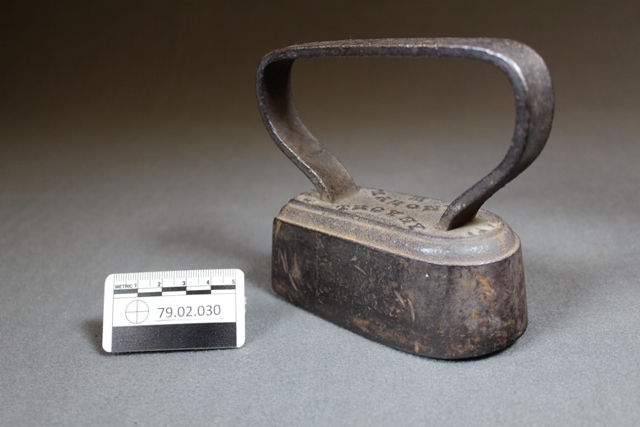
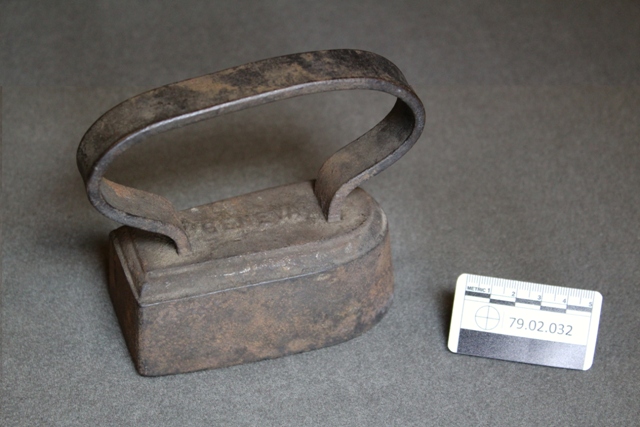
Starting in the Middle Ages in Europe, blacksmiths made simple flatirons called sadirons. The word “sad” was derived from the Old English word for “solid". It wasn’t until the Industrial Revolution, when the production of cast-iron was perfected, that flatirons were mass produced cheaply and became a common tool for laundry chores. The images below (catalog number 79.2.30 and 79.2.32) are examples of these.
Everything wrinkled; hence everything was ironed—from clothing to tablecloths. The clothes, especially if made of cotton, would first be dampened with water for best results. Multiple irons would be cleaned and lightly greased to prevent rust, then rubbed with beeswax to prevent sticking to the clothing. At least one iron was set on a clean heat source such as a cast-iron stove while another iron was in use. Heavier irons were more efficient but the weight had to be balanced with the user’s strength.
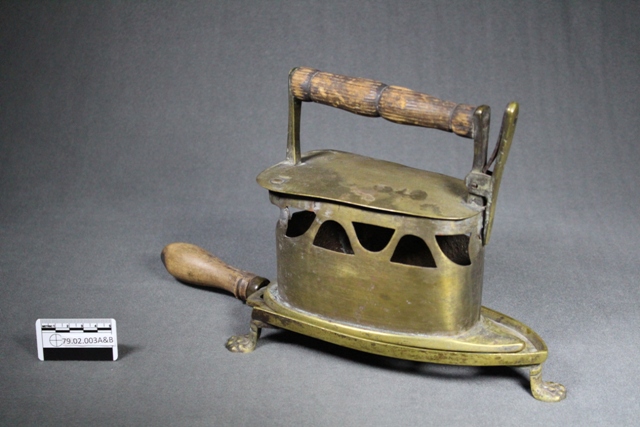
Some irons were hollow and were designed to have hot coals placed inside, like the one above (catalog number 79.2.3). Called box irons, these were more efficient than sadirons. The base of the iron could be kept clean since the whole iron did not need to go on the stove.