
Quilts of the Animas Museum
Crazy Quilts
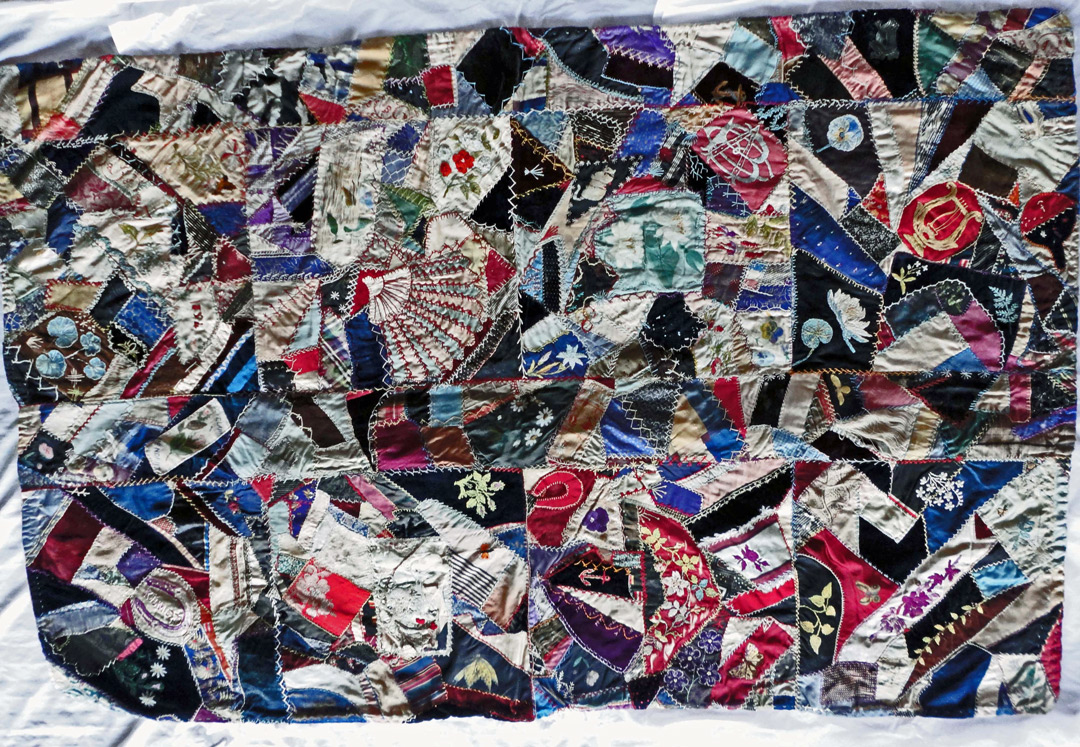
Crazy Quilts
Date: probably 1880s -1890s
Materials: cotton, velvet, silk, satin, brocade, no batting but lined with cotton ticking
Techniques: hand-pieced, embroidered, appliquéd, painted
Block pattern: crazy piecing
Maker: possibly Sarah Schafer
Gift of Lola Davis
Catalog Number: 95.5.1
The popularity for crazy quilts erupted in the 1880s. Odd bits of fine materials were sewn together in a haphazard way to imitate the “craze or crackle of old china” according to a pamphlet published in 1886. Crazy quilts are constructed on a foundation of muslin with a center patch, around which other pieces are added. Although the patches are added in a random manner, there is a recognizable grid of blocks that make up the whole block. Crazy quilts were for show, not hard use, and often did not have a batting sewn in. They showed off the quilter’s fine embroidery stitches. Often the quilter would include embroidered or painted symbols which might have personal meanings or make a subtle statement.
This is a perfect example of a crazy quilt which is made of fine fabrics with intricate embroidery stitches connecting the odd-shaped pieces. Sarah Schafer’s husband owned or operated a mine up Junction Creek and was also sheriff at one time.
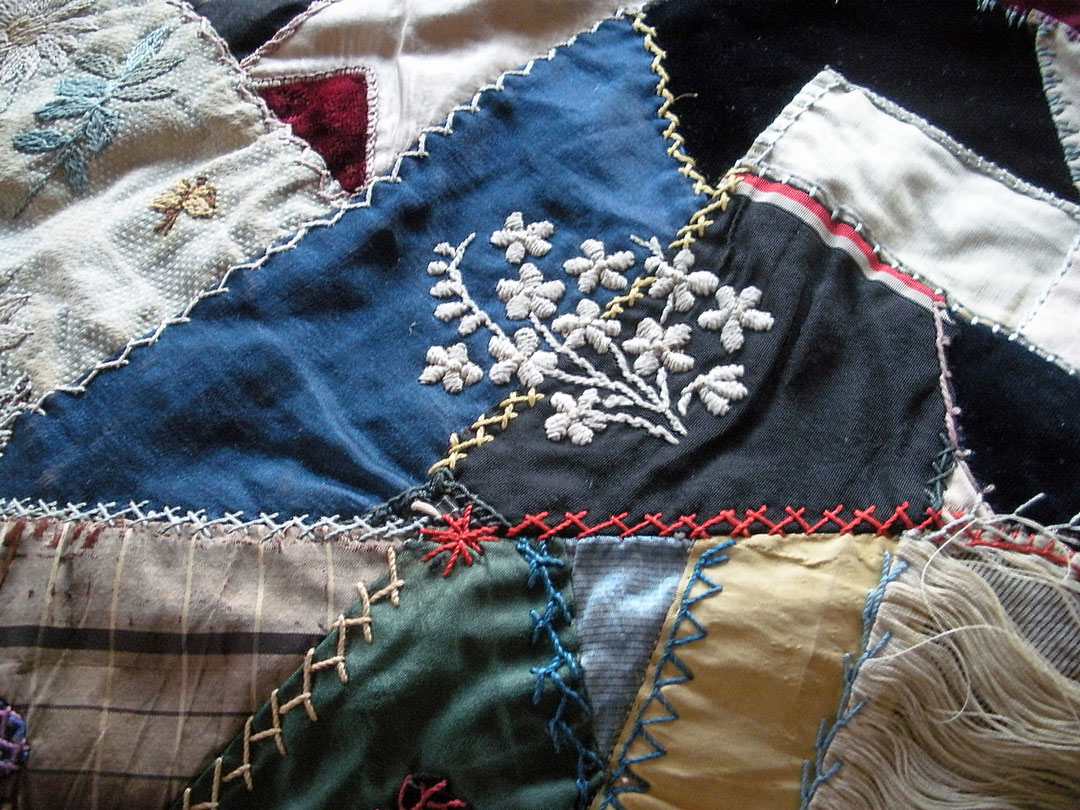
If you look closely, you will find the words “Cleveland and Hendricks 1894?” This was a way women could make a political statement at the time, like putting a bumper sticker on your car today. Grover Cleveland ran for President in 1884 and James Hendricks was his running mate. Somehow, the quilter got the actual date wrong by 10 years!
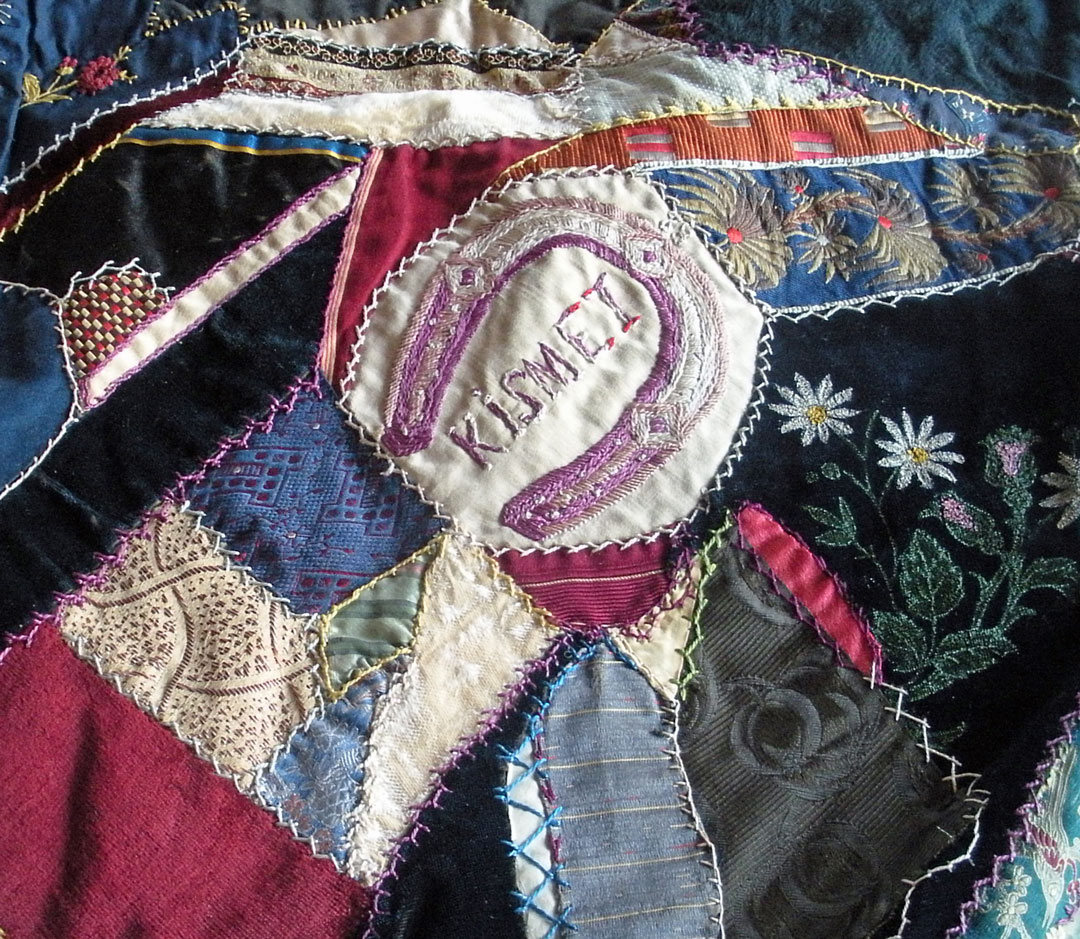 The word “Kismet” is also embroidered into the quilt. It is derived from several Eastern languages (Turkish, Persian, Arabic) meaning “fate or destiny” or from Serbian where it means “luck.” This may have been the meaning the quilter intended as it is associated with a horseshoe, often a symbol of good luck.