Railroad Bingo
More Equipment
More Equipment
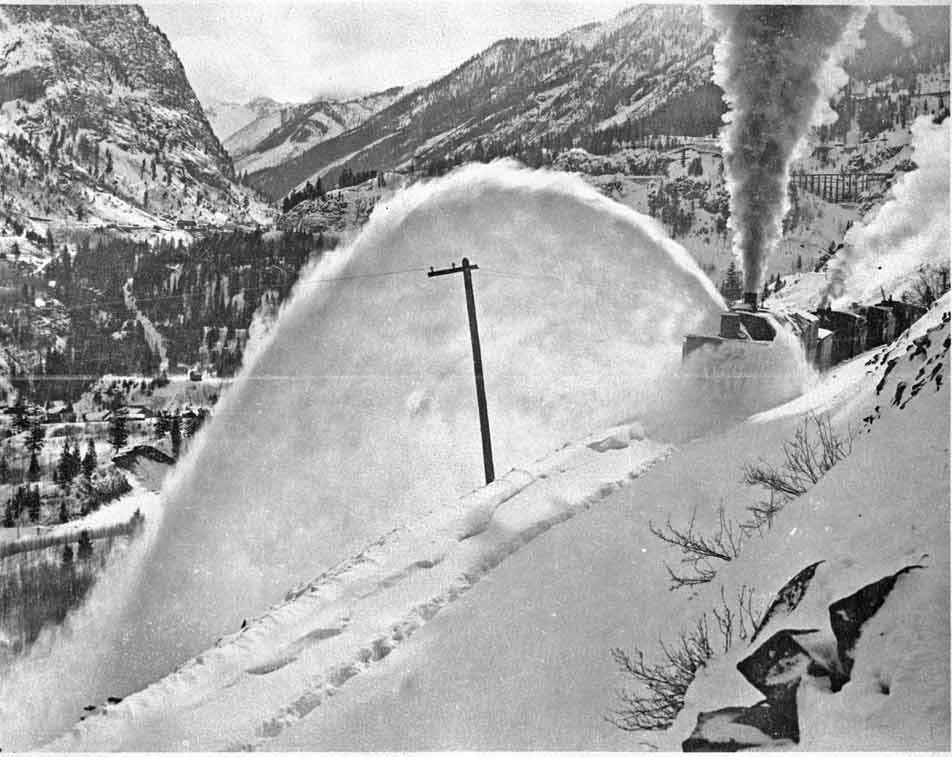
Sometime in the winter, the railroad would use rotary plows to clear the tracks. The image above (catalog number 92.22.83.2) shows a rotary at work on the Rio Grande Southern Railroad west of Durango. Rotary plows were not often used in the canyon between Durango and Silverton because the canyon is so narrow thus there is nowhere for the snow to go.
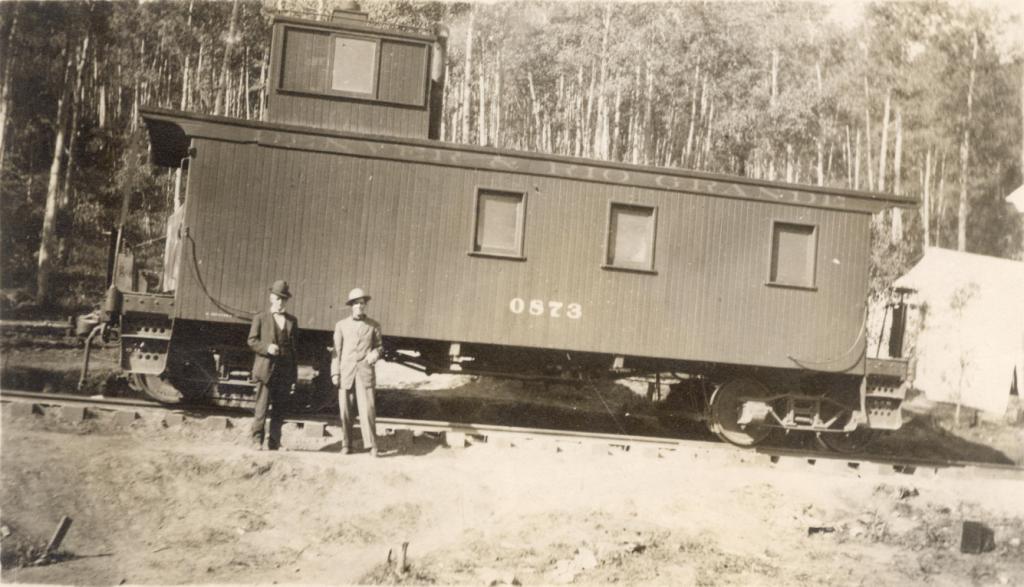
Freight trains typically have a caboose at the end. The caboose would provide the crew with a place to eat and sleep on a long trip. It could also be used as an office by the conductor.
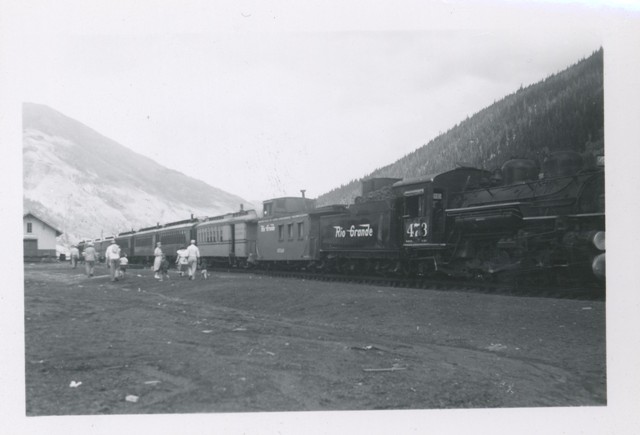
The image above (catalog number 03.58.1) shows a passenger train with a caboose behinde the tender. Railroaders might call a passenger train a string of varnish. Passenger trains often had several classes of service. Basic coaches could seat around 42 passengers. Fancy parlor cars would seat fewer passengers but offered more comfortable seats and other amenities.
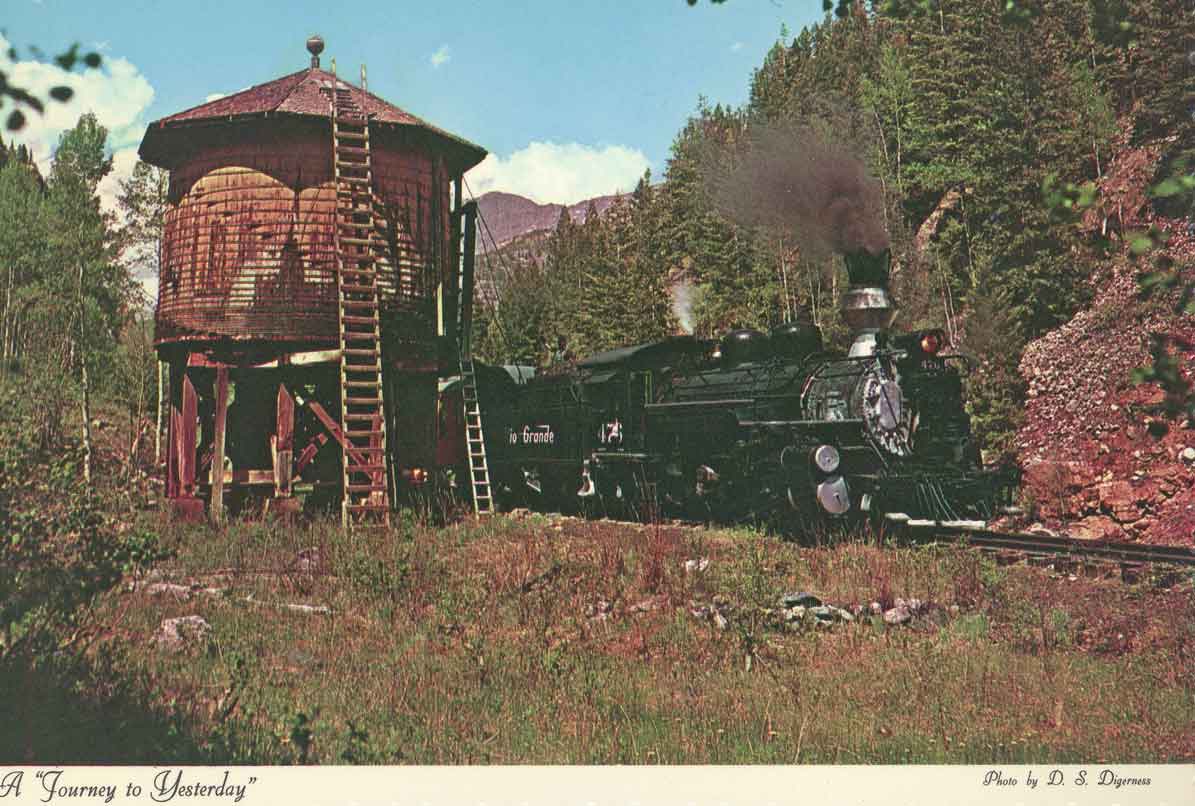
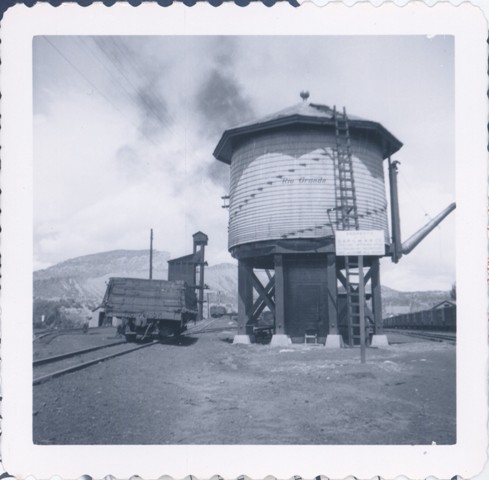
Steam trains usually couldn't carry enough water for their trips. Water towers were built every 15 to 20 miles so the train could stop and refill the tender. Tenders of the K-28 and K-36 class locomotives can hold 5,000 gallons of water. A roundtrip between Durango and Silverton requires 10,000 to 15,000 gallons. The water tank in the image above (catalog number 86.13.21) is still at Needleton between Durango and Silverton.
The water tower in the image below (catalog number 15.41.76) was in the Durango yard. The structure slightly to the left in the background was the coaling tower.