

During the 1930s people in Durango looked for entertainment and amusements to help them cope with the tough times brought on by the Great Depression. The average family didn’t have much extra income to spend on toys and games. However, card and board games were popular because people could get together with friends and neighbors at home to play them. When families did indulge their children, the toys they bought were very precious to them. Here are the top toys of each year from 1930 through 1939.
1930 Mickey Mouse
Walt Disney created Mickey Mouse in 1928 and released the popular cartoon “Steamboat Willie” that same year. In 1930 the original animator, Ub Iwerks, left the Disney Studio, which created a turning point in the Mouse’s career. As the Depression progressed, Mickey’s popularity rose so that by 1932, the Mickey Mouse Club had one million members. Cartoons heightened the sense of escapism, and people enjoyed following the adventures of Mickey Mouse.
This Mickey Mouse (catalog number 90.17.17) was part of the doll collection started at the Durango Public Library by librarian Sadie Sullivan.

1931 Finger Paint
Children in the 1930s did not have a lot of money for fancy toys so relied on their imagination and artistic abilities. In 1931 finger paint was the most popular toy.
1932 Sock Monkey
In 1932 the Nelson Knitting Company added a trademark red heel to its popular Rockford Red Heel Socks. During the Depression people would make stuffed monkey toys from worn Rockford socks. The red heel gave the monkeys their distinctive mouth. Stuffed monkeys were favorite toys inspired by books such as The Jungle Book and Just So Stories.
1933 Kewpie Doll
Rose O’Neill dreamed up the Kewpie doll while living in Durango. Although they started production in 1912, these dolls were still the most popular toy of 1933. (Catalog number 99.17.1.)

1934 Buck Rogers Pocket Pistol
The first science fiction comic strip “Buck Rogers in the 25th Century A.D.” debuted in 1928. In 1930 it became a color Sunday comic strip and by 1932 was a radio program. Children all over wanted to be like Buck so in 1934 the first Buck Rogers toy ray gun appeared.
1935 Shirley Temple Doll
By singing, dancing and being generally adorable, Shirley Temple helped countless people escape their worries during the Great Depression. This was something they desperately needed to do. Shirley was born in 1928 and made her film debut in 1934. Dolls in her likeness were first presented to the public in 1934 and were an instant hit. They were priced at $3 to $5 which was a large sum of money at the time.
1936 Balsa Wood Model Sets
Paul K. Guillow, a WWI naval aviator, started offering kits to make model airplanes out of balsa wood soon after Charles Lindberg’s first solo trans-Atlantic flight in 1927. The kits retailed for 10 cents which was considered a good deal at the time. They were wildly popular with airplane crazed children.
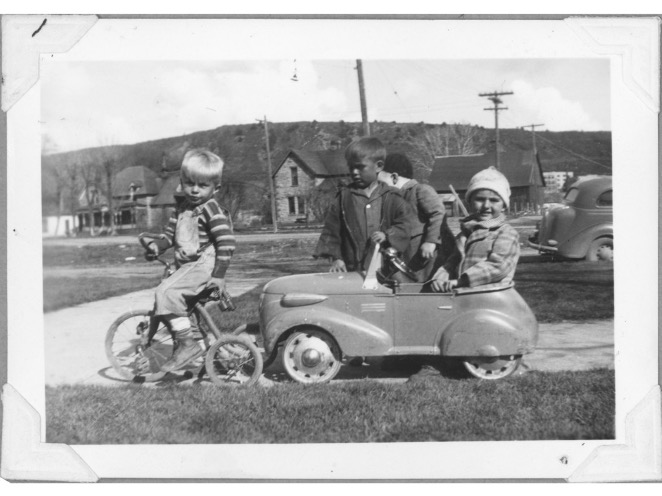
1937 Pedal Cars
Owning a pedal car was every child’s dream dating back to the 1890s. During the Depression, fancy metal pedal cars were expensive and only available to the children of well to do families. These are the lucky nieces and nephews of Florence Erickson Whiteman enjoying a pedal car in Durango (catalog number 15.59.16.19).
1938 Red Ryder BB Gun
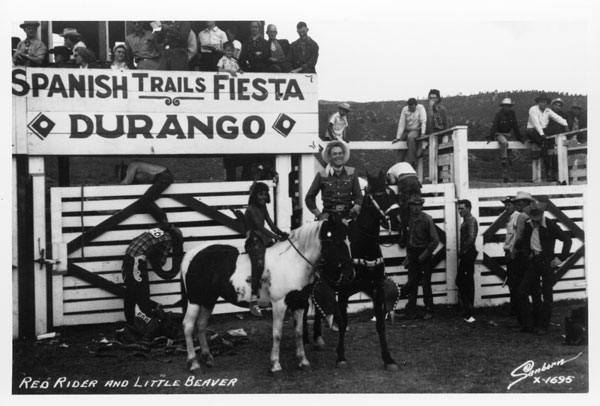
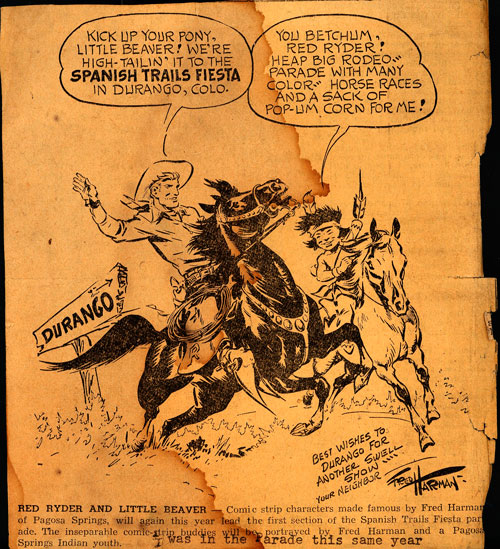
In 1938 Pagosa Springs resident and artist Fred Harman was asked to illustrate a new comic strip called Red Ryder. Introduced in November of 1938, cowboy Red Ryder and his sidekick Little Beaver became the longest running and most popular Western genre comic characters. They often visited Durango during the Spanish Trails Fiesta (catalog numbers 89.19.268 and 86.3.99). The first BB gun, model 1938B, was actually introduced by Daisy Outdoor Products in 1939 and remains popular to this day, especially after the 1983 movie A Christmas Story.
1939 Ventriloquist Dolls
The dummy Charlie McCarthy was the creation of ventriloquist Edgar Bergen (1903–1978). Bergen first introduced McCarthy to radio audiences on Rudy Vallee’s show in 1936. The act was an instant hit. The following year Bergen and McCarthy began a successful run hosting the popular Chase and Sanborn Hour. Bergen and McCarthy are credited with either saving the world or creating panic. On October 30, 1938, many people listened to Bergen and McCarthy on the radio instead of Orson Welles’ War of the Worlds. Many people listening to Bergen’s show adjusted their radio dials 12 minutes later to the War of the Worlds. Unfortunately they had missed the intro and panicked!
Board Games
With little money to spend on entertainment, families enjoyed new board games such as "Monopoly" and "Scrabble" which were first sold during the 1930s. Introduced in 1935 by Charles Darrow, the board game Monopoly actually has older roots. Lizzie Magie invented the game in 1904 to teach players about income inequality and the problems of the Gilded Age. Darrow tweaked it a bit and finally sold his version of the game to Parker Brothers in 1934. By this time, the game came to represent the opposite of what Magie had hoped it would teach.
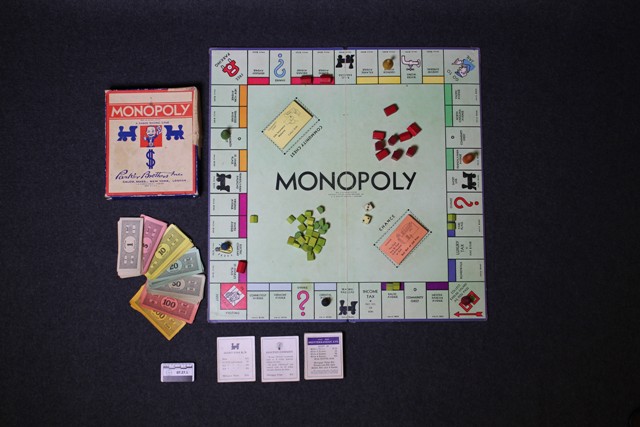
This Monopoly set (catalog number 07.27.1) was used by the Stilwell Family at their Electra Lake cabin.