

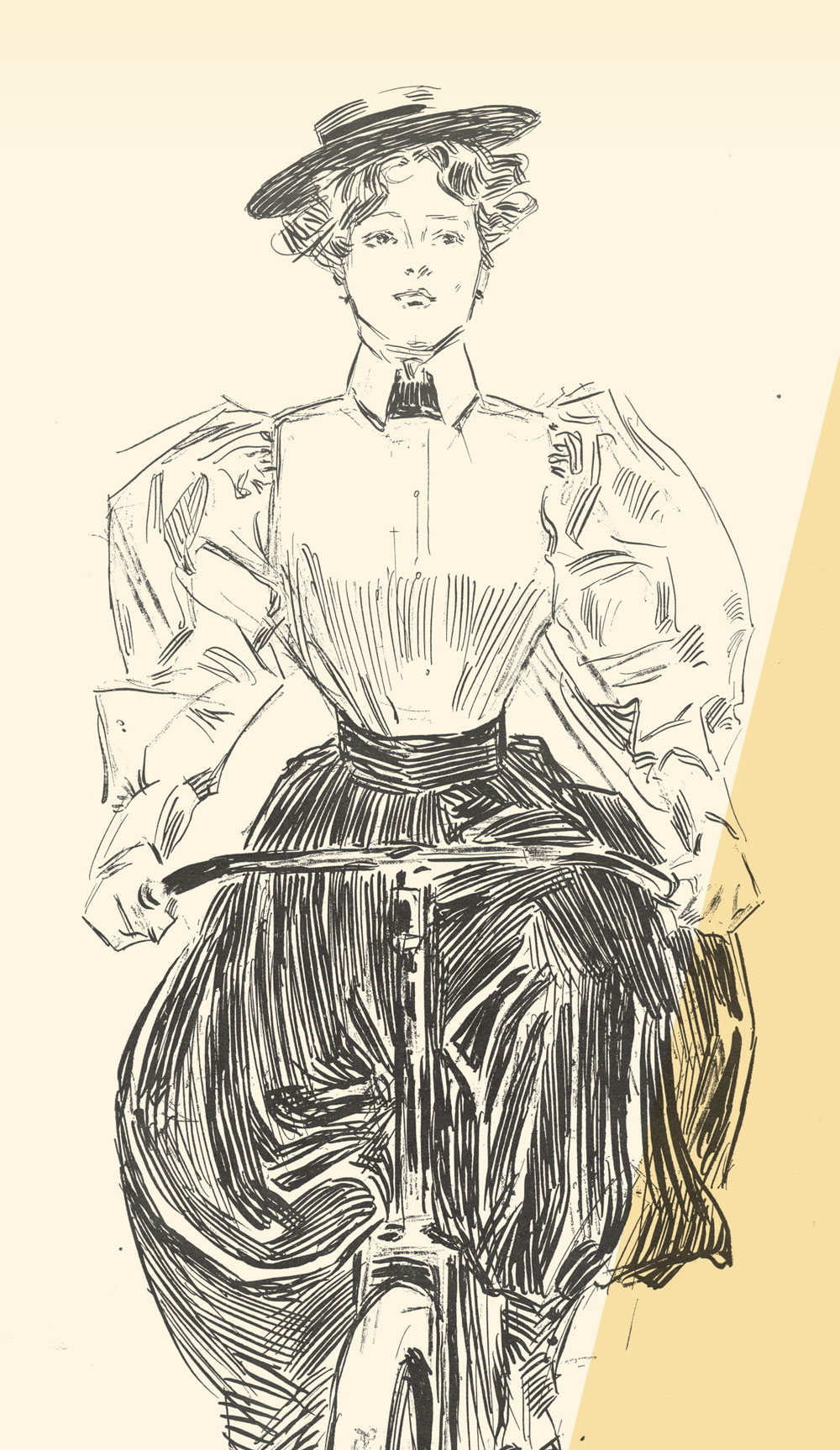
The New Woman
In the 1890s, the image of the "New Woman"--young, athletic, educated, and devoted to progressive ideas, especially suffrage--emerged as a radical social force in American society. Awakening the public to an awareness of gender inequality, she ushered in a new century. Black and white women alike embraced the idea of the New Woman, and the image of an educated woman freely moving outside the home inspired many. Women saw education as the first step to progress.
Top image:
The New Woman, 1895 Many women used bicycles to move more freely and quickly through their communities. Images like this one became associated with women's rights. Zinc engraving by Charles Dana Gibson Courtesy of Library of Congress, Prints and Photographs Division, Washington, D.C.
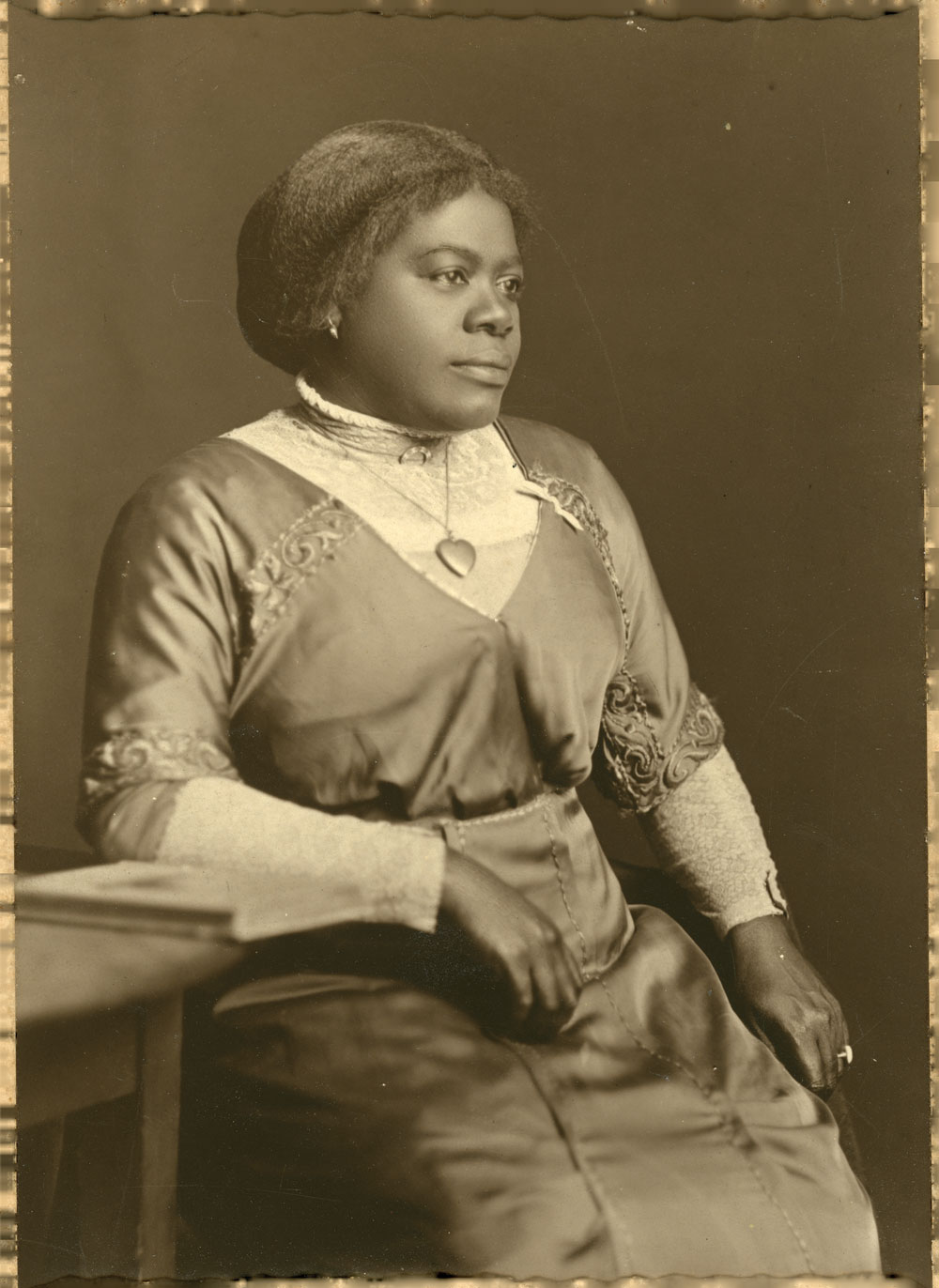
As a teacher in Florida, Mary McLeod Bethune (1875-1955) became acutely aware of the dual oppression of racism and sexism that Black girls faced. In 1904 she founded the Daytona Normal and Industrial School for Training Negro Girls. The school's classical liberal education gave students the tools they needed to become community leaders. Gelatin silver print by William Ludlow Coursen, 1910 or 1911 Courtesy of State Archives of Florida, Collection M95-2
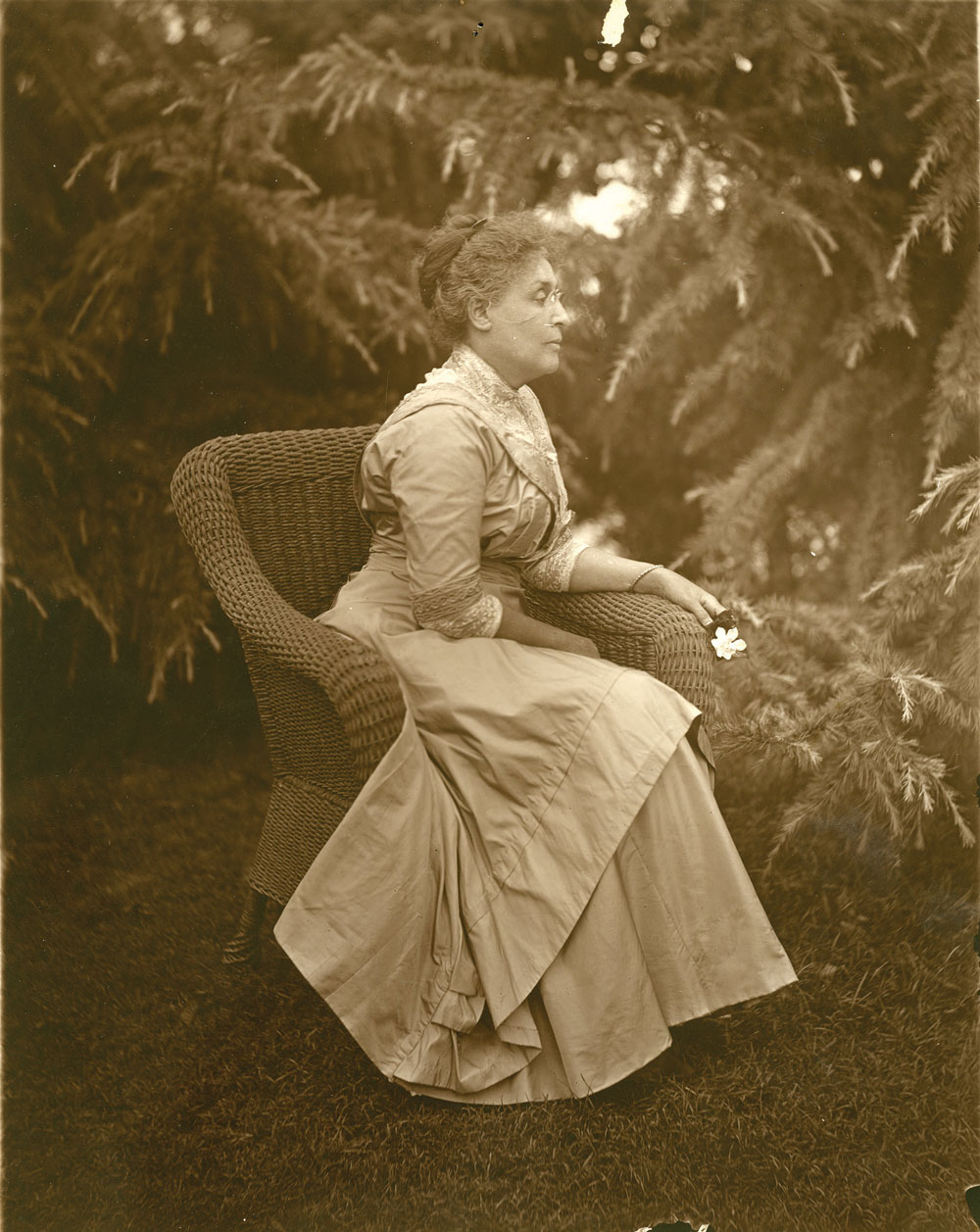
Principal of the Tuskeegee Institute in Alabama, Margaret Murray Washington (1865-1925) worked to improve the lives of Black women in the segregated South. She was not an active suffragist, but she was a founding member of the National League of Colored Women, which promoted the cause. Gelatin silver print, c. 1917 Courtesy of Xavier University of Louisiana
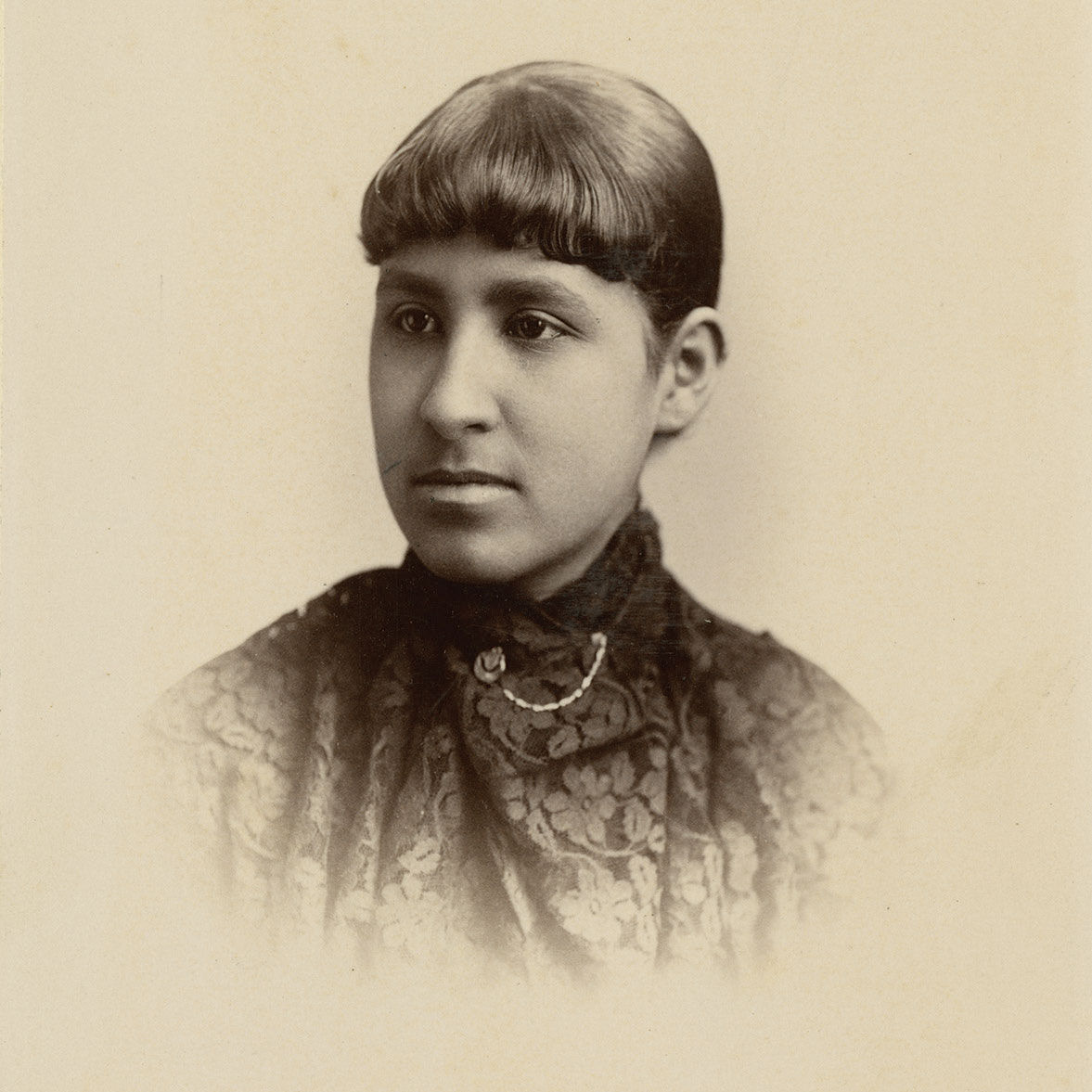
Mary Church Terrell (1863-1954) became an activist in 1892 after a friend was lynched. A leader for Black women's citizenship rights, she was the first president of the National Association of Colored Women. In an 1898 speech, she described Black women's efforts and "lifting as we climb, onward and upward we go..." Albumen silver print by H.M. Platt, 1884 Courtesy of Oberlin College Archives
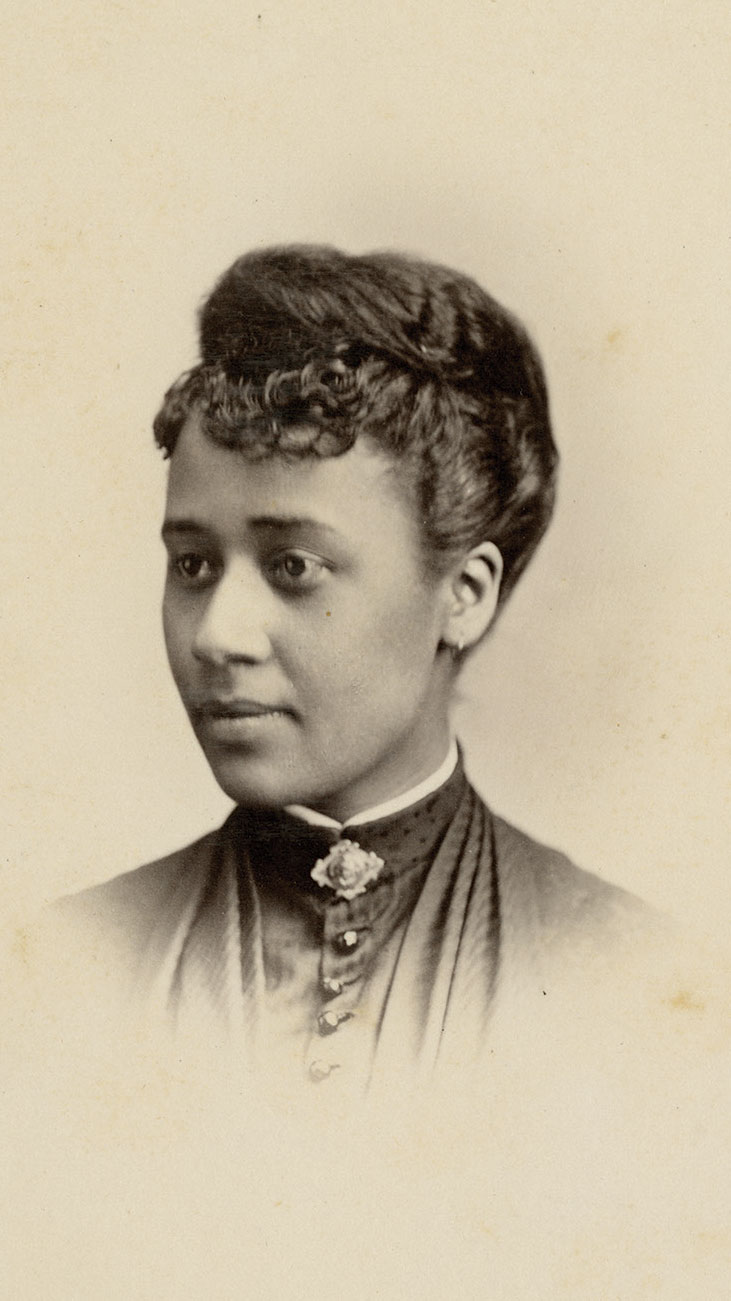
As a teacher, writer, lecturer, and activist, Anna Julia Haywood Cooper (1858-1964) pioneered a path for the liberal arts education of Black women. Albumen silver print by H.M. Platt, 1884 Courtesy of Oberlin College Archives