


Suffragists Were Political Geniuses
In the 1910s, suffragists in the United States decided publicity was their best course of action to change the country's mindset about women's voting rights. Inspired by the work of British suffragettes, and led by Alice Paul, they turned to non-violent spectacles considered shockingly militant for women at the time, most notably parades and picketing of the White House.
On March 3, 1913, Paul and the National Woman's Party organized thousands of women--many wearing white--to march down Pennsylvania Avenue in Washington, D.C. The women's march attracted a crowd of more than 500,000 and upstaged the inauguration speech of President Wilson the next day. This was the first time anyone had ever staged a non-violent march on Washington.
Top image:
College Women Picketing in Front of the White House, 1917 In the first such protest in history, women picket the White House every day from January 1917 until the 19th Amendment was ratified in August 1920. On this day, college-educated women worked the picket line. Gelatin silver print Courtesy of National Woman's Party, Washington, D.C.

Alice Paul (1885-1977) was a brilliant political tactician, introducing headline-grabbing tactics like parades, vigils, and hunger strikes. When President Woodrow Wilson made speeches about democracy and freedom, Paul used his own words to point out his hypocrisy. In 1916 she founded the National Woman's Party to push for a constitutional amendment. Gelatin silver print by Underwood & Underwood, c. 1923 Courtesy of National Portrait Gallery, Smithsonian Institution; gift of Fraces A. DiMauro
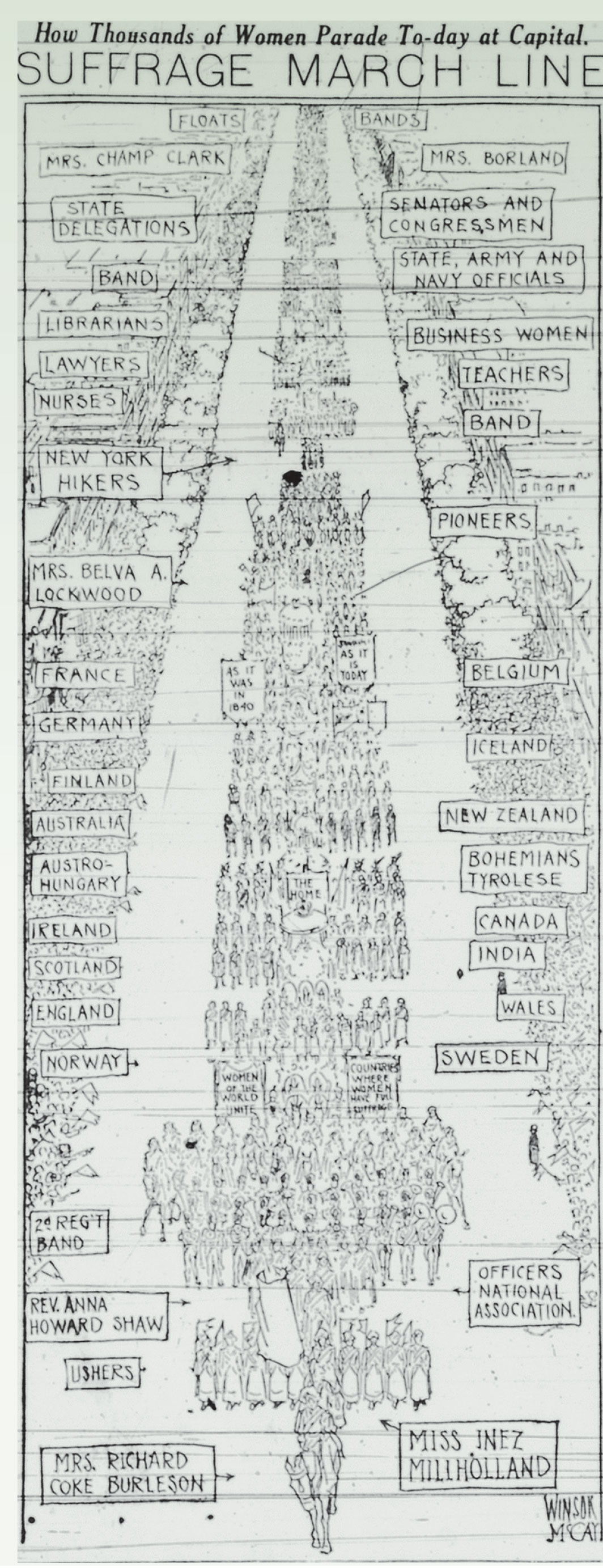
Suffrage March Line, 1913 On March 13, 1913, between five and eight thousand suffragists made history as the first nonviolent political protest group to march through Washington, D.C. The crowd watching the women became so numerous that the army's cavalry had to be called in to clear the path for the women. Courtesy of Library of Congress, Prints and Photographs Division, Washington, D.C.
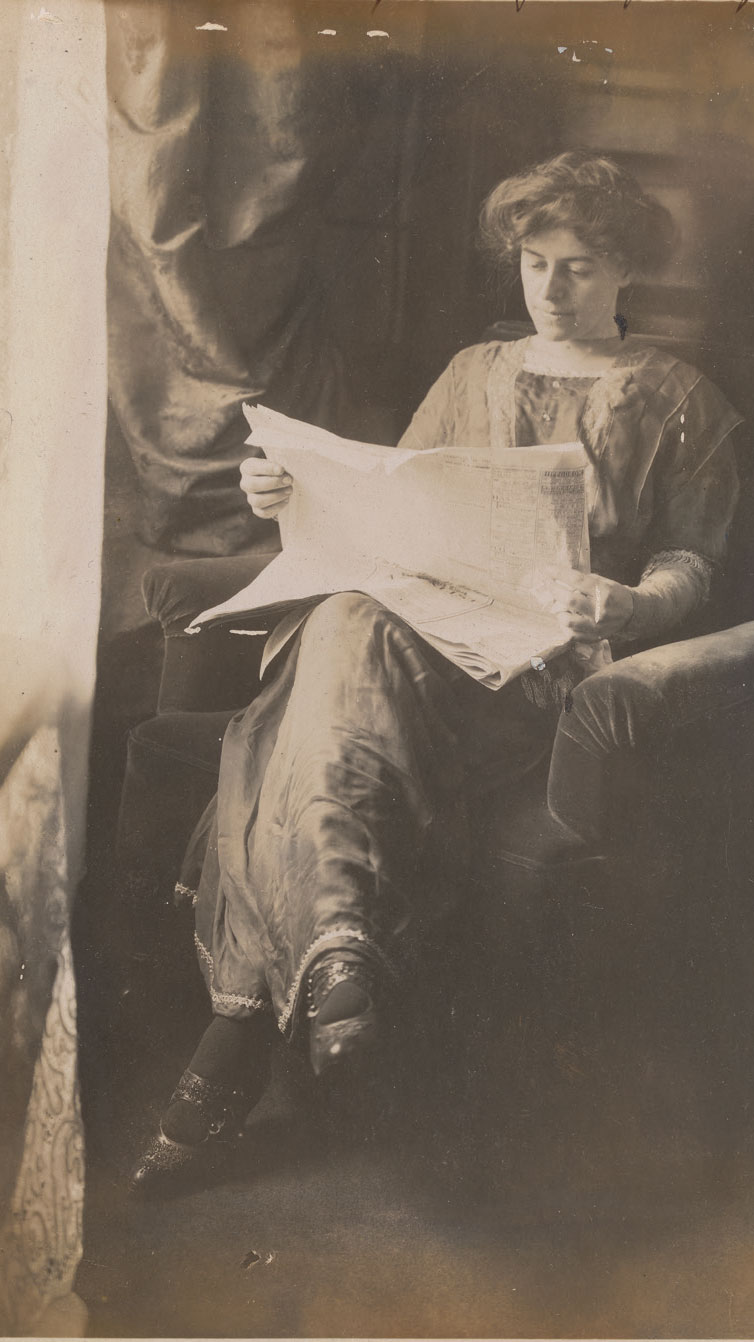
"General" Rosalie Gardiner Jones (1883-1978) and her "Ambassadors of Justice" walked for 16 days from New York City to Washington, D.C., to join the suffrage parade on March 13, 1913. Jones felt the "hike" was a chance to bring the message to small towns in person. Gelatin silver print, c. 1913 Courtesy of The H. Chase Livingston Suffrage Collection
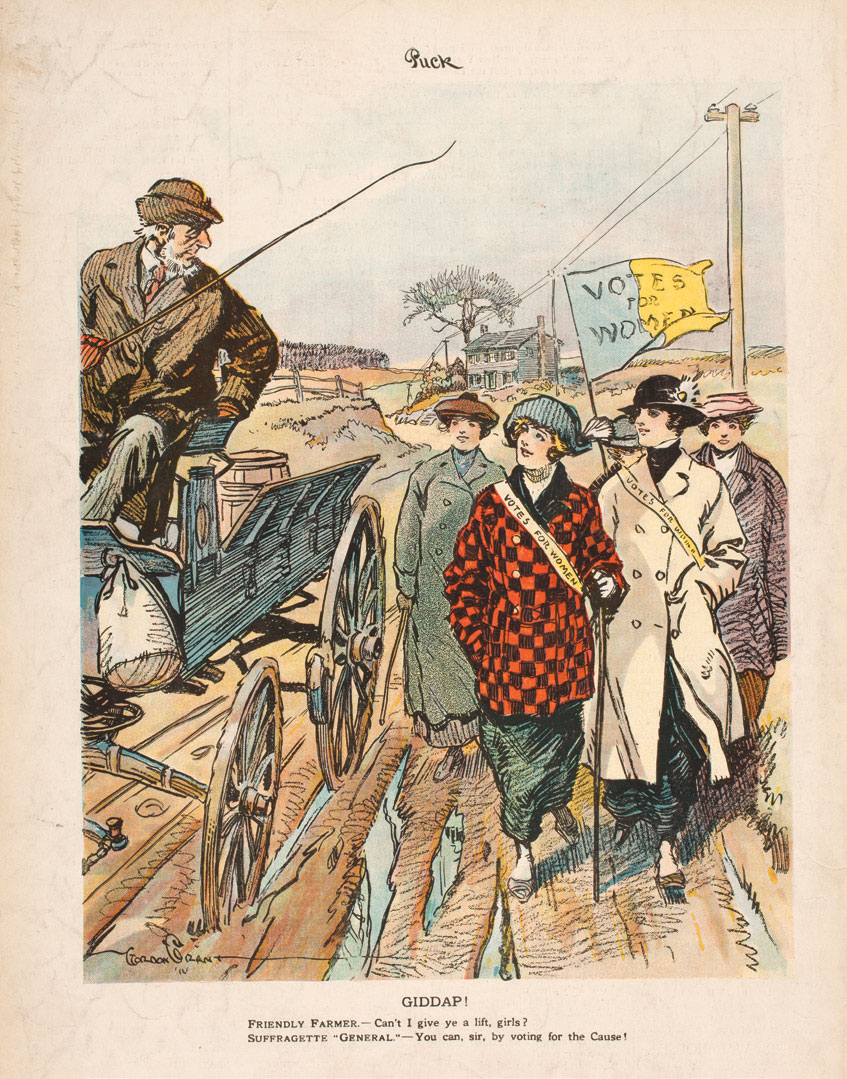
Giddap!, 1914 When Rosalie Gardiner Jones led a group of women "hikers" who walked hundreds of miles to the 1913 suffrage march, one of her goals was to raise public awareness. Cartoons like this were one form of the publicity she generated. In the sketch, the women ask the farmer to vote for women's suffrage. The title "Giddap!" suggests that he is about to gallop off in horror. Cartoon by Gordon Grant from Puck magazine, March 14, 1914 Courtesy of Robert P.J. Cooney Jr.
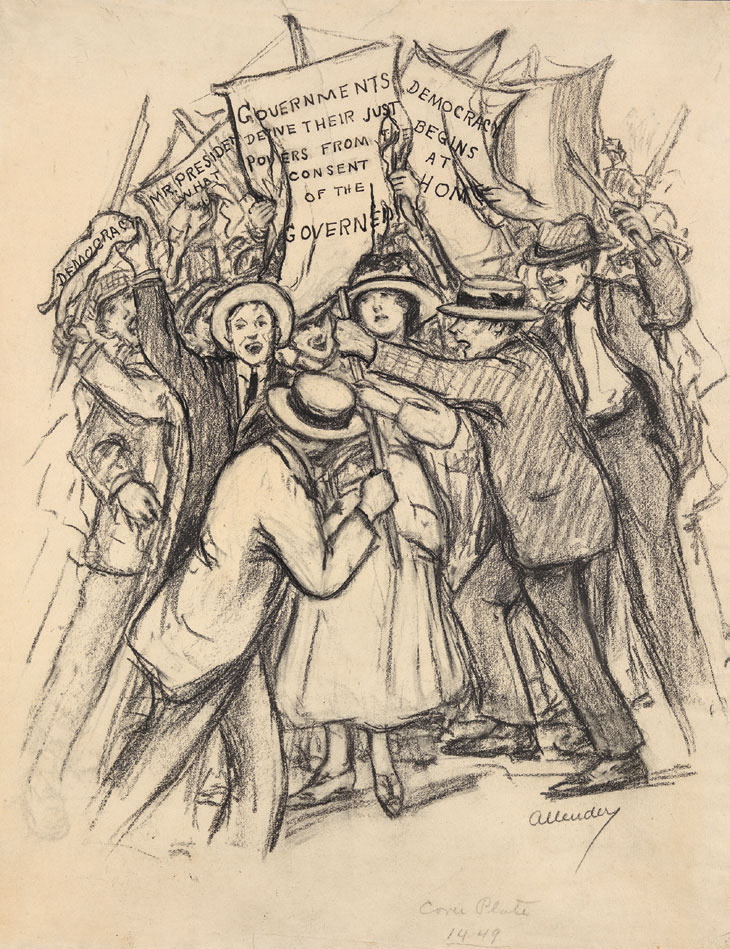
Training for the Draft, 1917 Picketing suffragists sometimes met with violence from furious and aggressive men. This sketch links suffragists to the soldiers of World War I and suggests that the women's fight for the vote was simmilar to combat. Charcoal sketch by Nina E. Allender Published in The Suffragist, September 29, 1917 Courtesy of National Women's Party, Washington, D.C.