

American Suffragists Had Courage
In the fight for the vote, suffragists took risks women today don't think of as dangerous. But protesting in public, such as picketing the White House, was considered unseemly and undignified. Mary Church Terrell was the only Black woman to participate, in part due to prejudice, but also because being jailed was life-threatening for women of color.
In 1915--a time when it was rare to see women driving--suffragist "envoys" drove across the country and gathered more than 500,000 signatures in a "monster petition." During World War I, suffragists sponsored all-women teams of doctors and nurses to the front lines, where they endured direct bombardment. These compelling tactics created massive support for the suffrage cause.
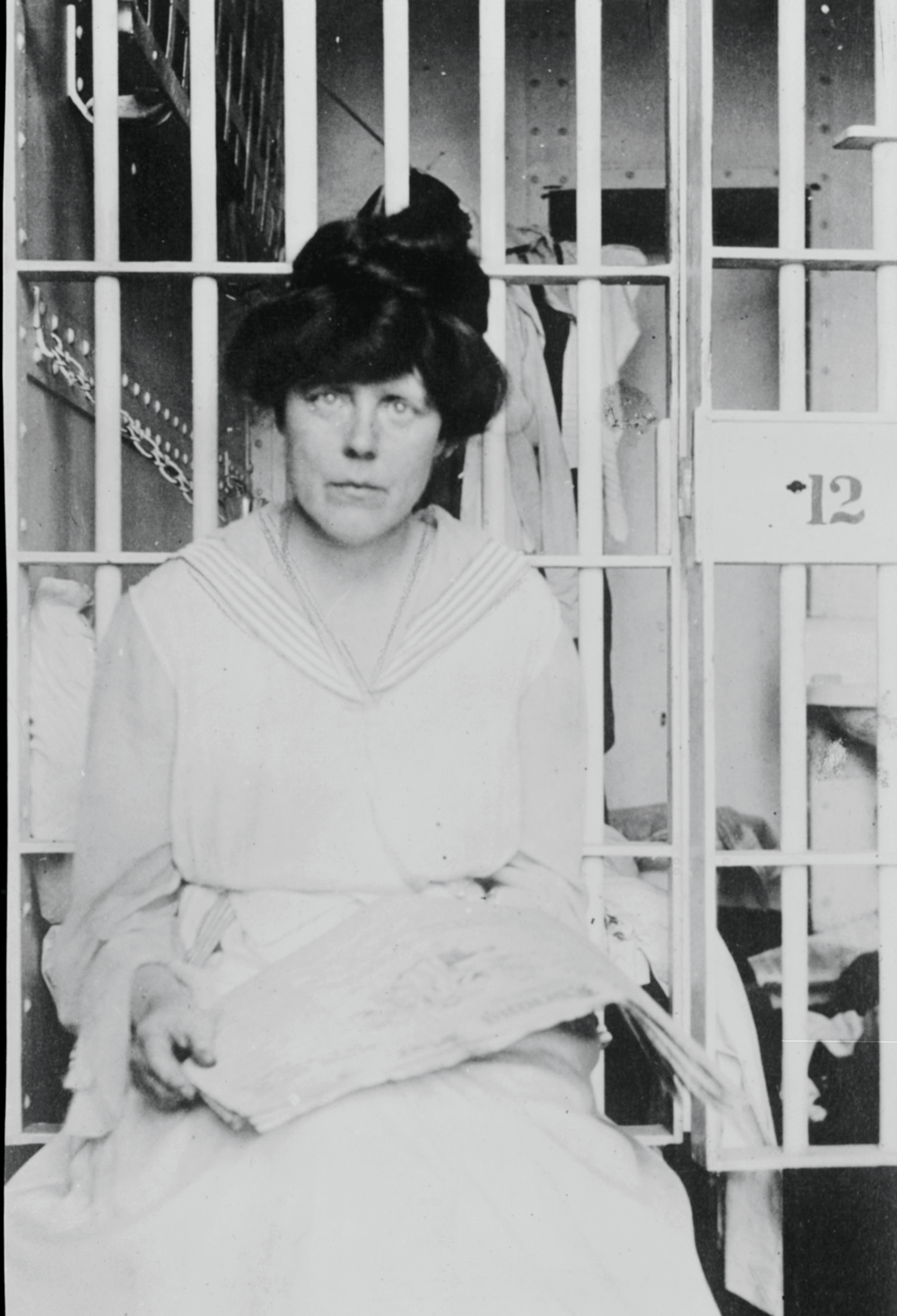
Top image:
Lucy Burns in Jail, 1917 Co-founder of the National Women's Party, Lucy Burns (1879-1966) led the picketing of the White House. Arrested for "obstructing traffic," she served six different prison sentences. In prison, she went on hunger strikes to protest being jailed on false charges. Gelatin print Courtesy of National Woman's Party, Washington, D.C.
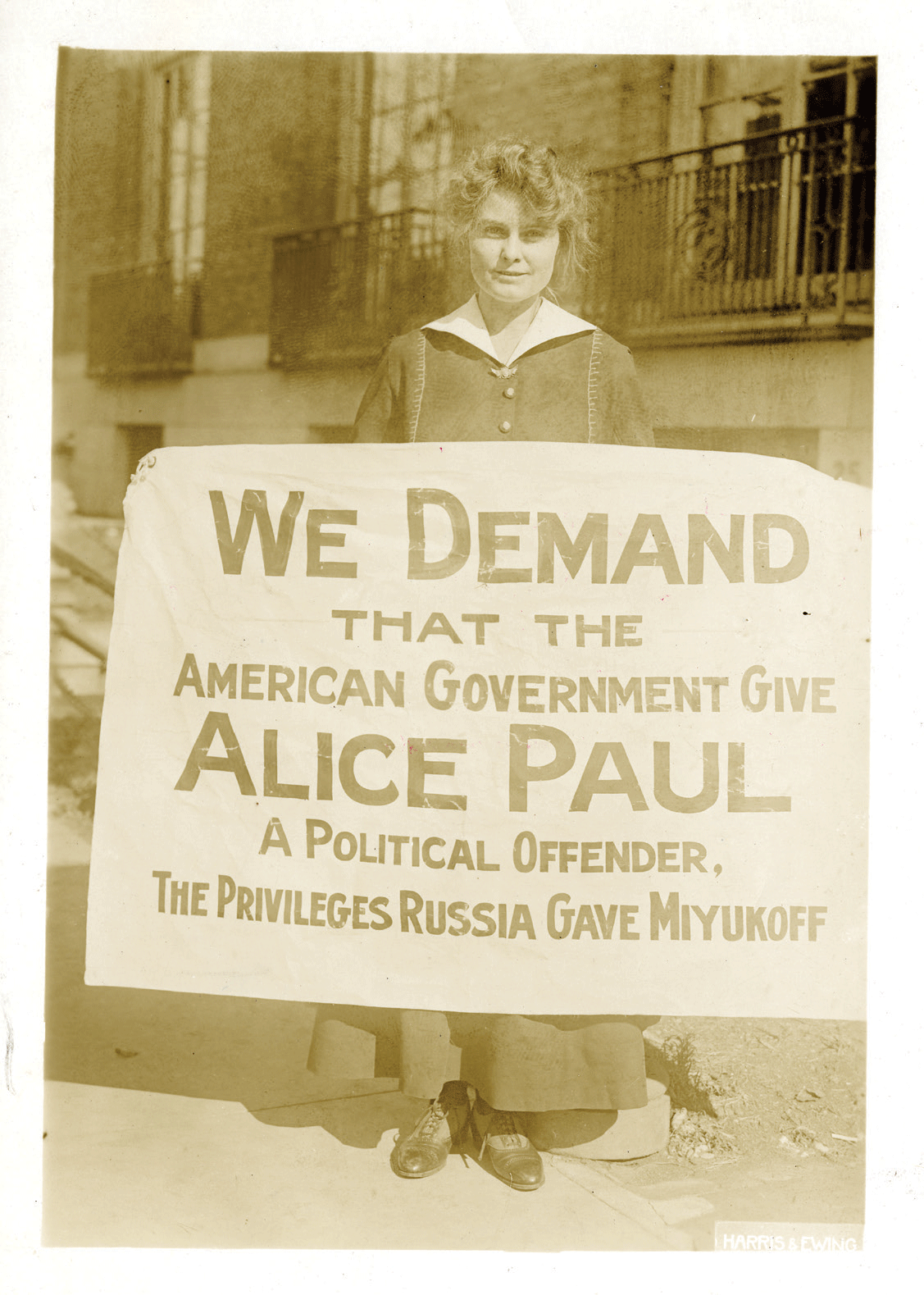
Lucy Branham (1892-1966) put her Ph.D. studies at Columbia University on hold to become one of the most active militants in the movement. This photo shows her protesting the brutal treatment of Alice Paul and other jailed suffragists. Gelatin silver print by Harris & Ewing Studio, 1917 Courtesy of National Museum of American History, Smithsonian Institution, Alice Paul Centennial Foundation, Inc.
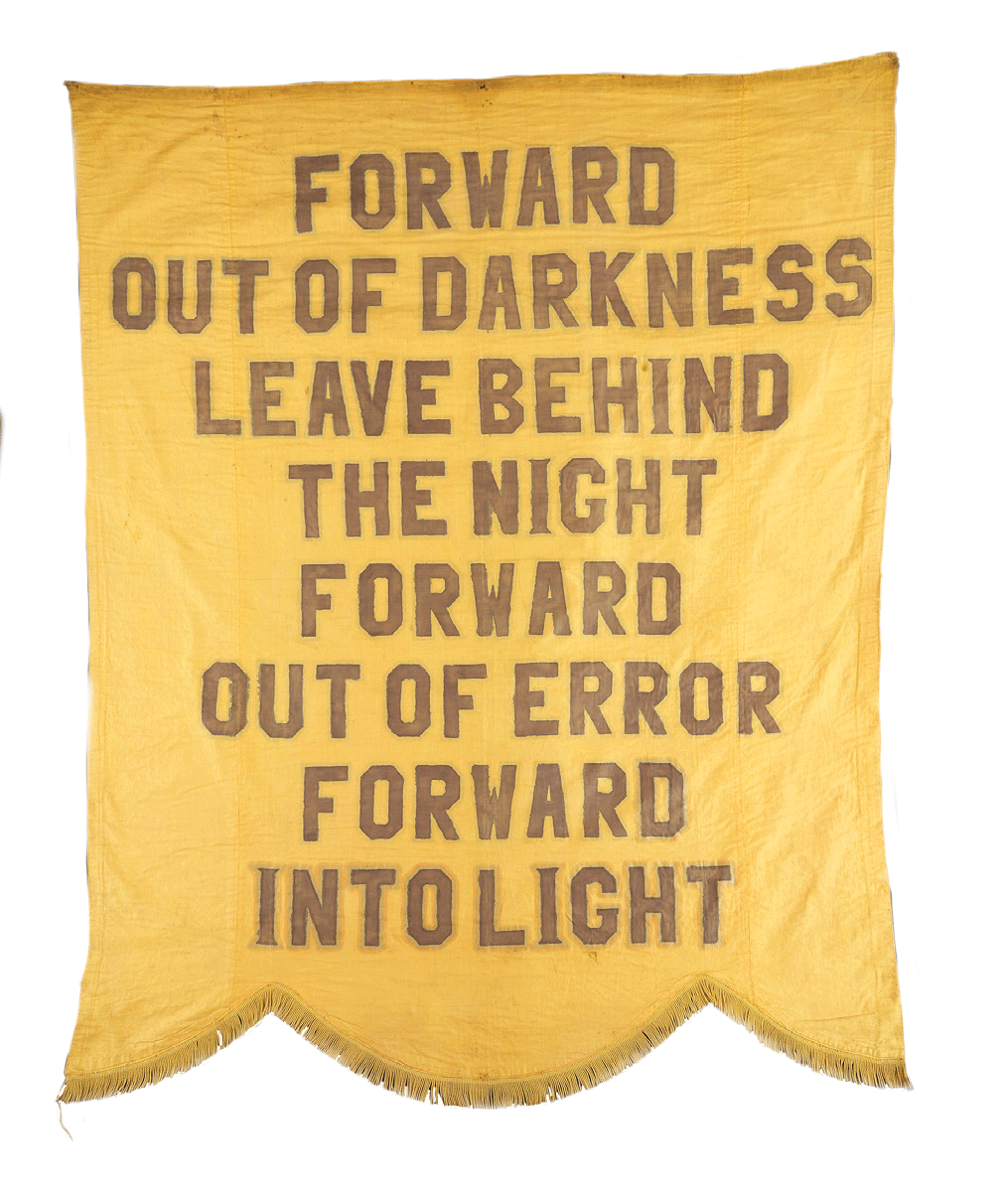
Suffragist Banner, c. 1913-1920. Handmade banners became a trademark of picket lines organized from 1917 to 1919 by the National Women's Party. Golden yellow was a signature color of the movement. Courtesy of National Woman's Party, Washington, D.C.
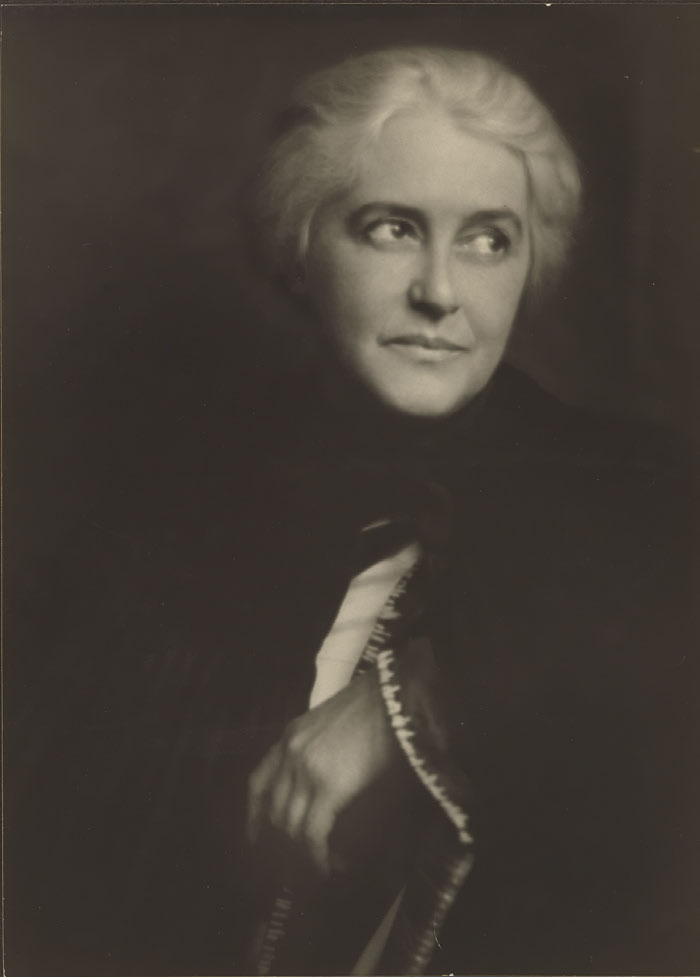
Sara Bard Field (1882-1974) worked for church missions, soup kitchens, and kindergartens before she became the sole paid organizer for Oregon's suffrage movement. Her husband disapproved, and she divorced him. Gelatin silver print by Johan Hagenmeyer, 1927. Courtesy of National Portrait Gallery, Smithsonian Institution ©The Regents of the University of California, The Bancroft Library, University of California, Berkeley
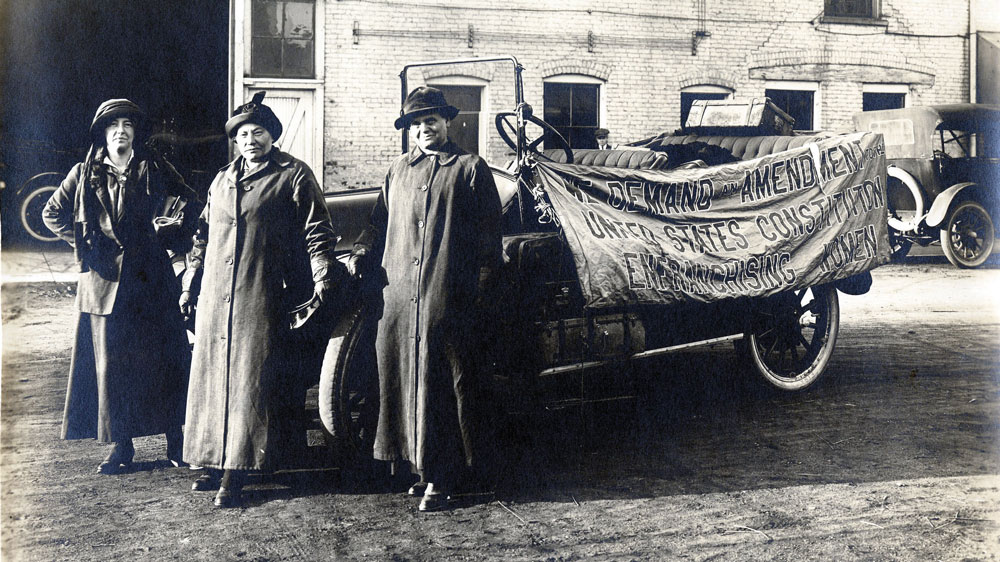
Women Envoys on the Road, 1915. In 1915, a time when it was rare to see a woman drive a car, Alice Paul sent Sara Bard Field (with mechanic Maria Kindberg, center, and driver Ingeborg Kindstedt, right) on a coast-to-coast road trip to win people to the cause. On the three-month journey, the "envoys" stopped frequently to give talks, join parades, and get more than 500,000 signatures on a petition. Courtesy of National Women's Party, Washington, D.C.
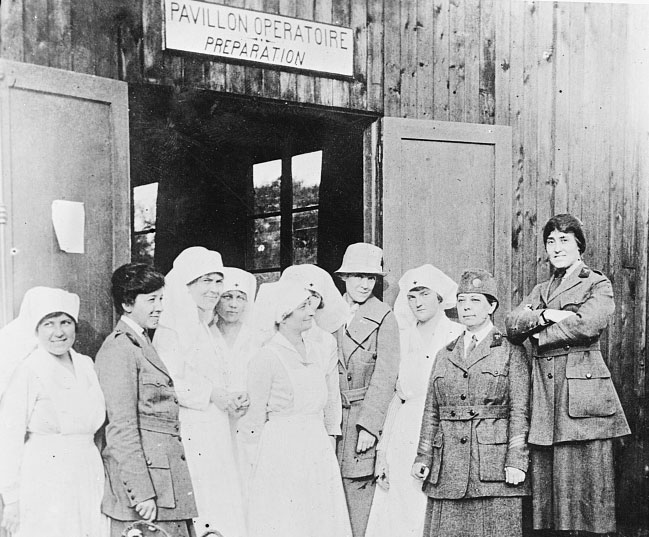
Staff of Military Unit of Women's Overseas Hospitals, c. 1917. During World War I, suffragists funded a team of women--including doctors, nurses, carpenters, electricians, and a master plumber to set up hospital units in France to care for soldiers and refugees. They survived being gassed and bombarded, and their courage and patriotism proved that women deserved full citizenship rights. Courtesy of Library of Congress, Prints and Photographs Division, Washington, D.C.