
World War I in La Plata County
Coming Home In Flander’s Fields
Coming Home In Flander’s Fields
Between the crosses, row on row,
That mark our place; and in the sky
The larks, still bravely singing, fly
Scarce heard amid the guns below.
We are the Dead. Short days ago
We lived, felt dawn, saw sunset glow,
Loved and were loved, and now we lie
In Flanders fields.
Take up our quarrel with the foe:
To you from failing hands we throw
The torch; be yours to hold it high.
If ye break faith with us who die
We shall not sleep, though poppies grow
In Flanders fields.
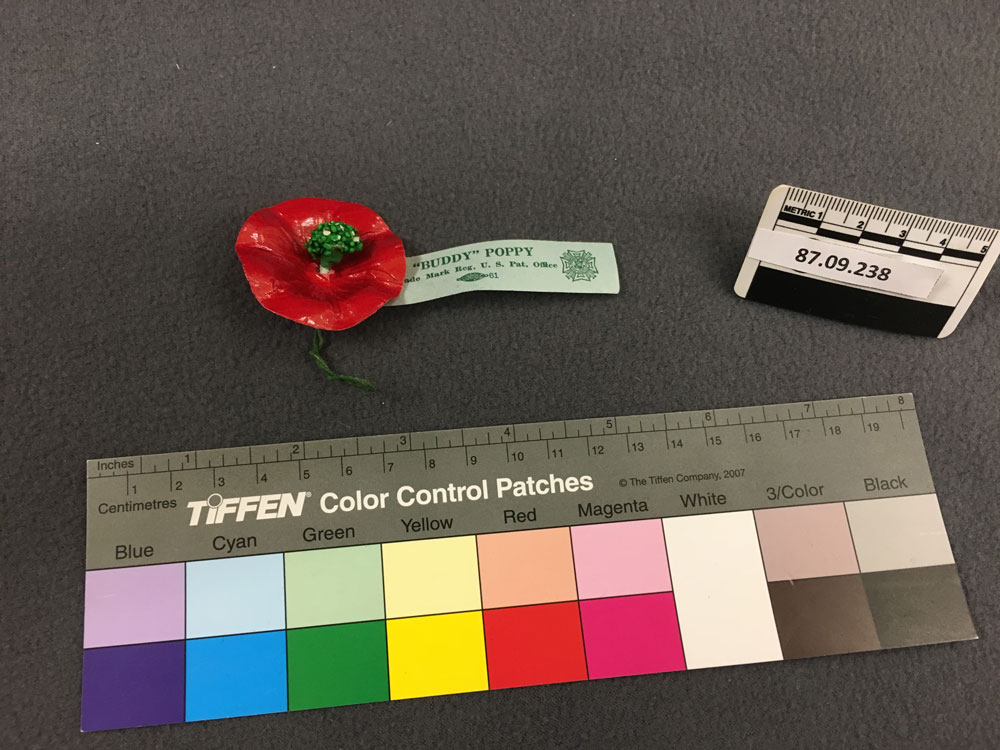
Although the U.S. was not yet in the war when Canadian physician Lieutenant-Colonel John McCrae wrote this poem in 1915, it became one of the most often quoted poems from the Great War. It was used to promote the sale of War Bonds, to encourage men to enlist in the armed forces and as propaganda against pacifism. Because of this poem, poppies have become a symbol for remembrance of soldiers who have died in battle, especially in World War I. The poppy below, in the Museum's collection, belonged to Art Wyatt.
The End
The aftermath of The Great War, “the war to end all wars” saw a shattered Europe, her population devastated by combat and disease. After the war, four empires had fallen: Russia, where the Bolsheviks had taken power; Austria-Hungary was divided with a loss of territory; the Ottoman Empire, where Turkish nationalism was on the rise and Germany, where the monarchy ended. The world map was redrawn, as territories in Europe and colonies around the world changed hands.
Technology changed; the war which had started as an infantry war using horse power would end with tanks and aircraft. The war saw the U.S. rise to a world industrial and economic power while suffrage for women came closer.The Treaty of Versailles which ended the war was so harsh and punitive, it set the stage for what would become World War II.
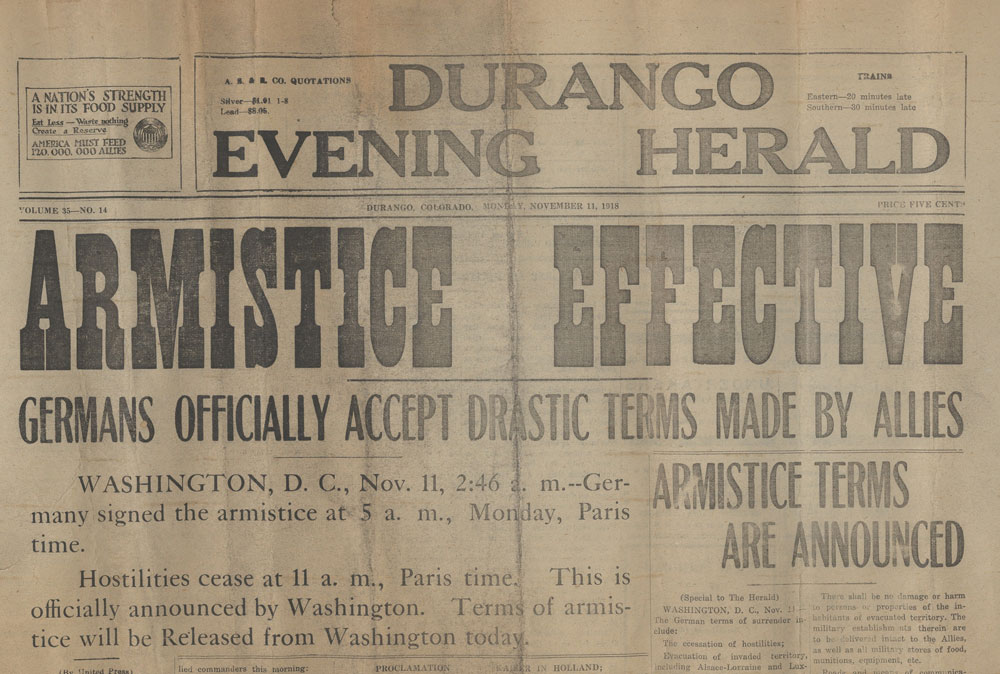
It is said that “all history is local history” and the end of the war changed La Plata County and Colorado as well.