
World War I in La Plata County
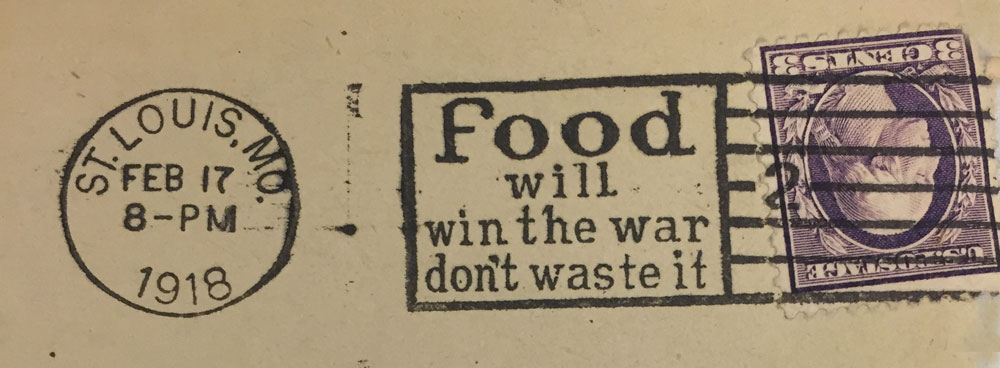
After years of war, Europe was starving. Rich farmland had become battlefields and military needs had caused a farm labor shortage. When the U.S. joined the war, it was imperative to send food relief to the civilians of the allied nations as well as feeding the growing military. Herbert Hoover became the head of the Food Administration, announcing, “Food Will Win the War.” Newspapers spread the message that through voluntarily limiting consumption of some foods, increasing production, and eliminating food waste, Americans could demonstrate their patriotism and contribute to an Allied victory. La Plata County residents responded quickly to the challenge.
Sugar was considered critical to boosting energy and morale in Europe. Americans were asked to curtail their sugar consumption. Said the Durango Democrat; “If the Kaiser wins – you know the fate of Belgium. Buy three pounds of sugar per person per month – use corn syrup, molasses, sorghum, honey and maple syrup... The sugar shortage is serious. The need of Europe for the granulated sweetness is urgent. It is a little thing for us who are at home in safety to dispense with a little sugar so that the beastly Huns may be whipped, routed and tramped upon.”. Patriotic Americans were urged to not use sugar on cantaloupe, bananas, watermelon or honey dew. Sugar could be used on raw acid fruits and berries, raw peaches, and pineapple. Two teaspoons of sugar were allowed per cup of coffee or tea.
Meat, particularly beef, was also critical to the war effort. Cooks were urged to stretch meat by preparing stews and increasing the use of cheese, pinto beans, soy beans, nuts, and fish.
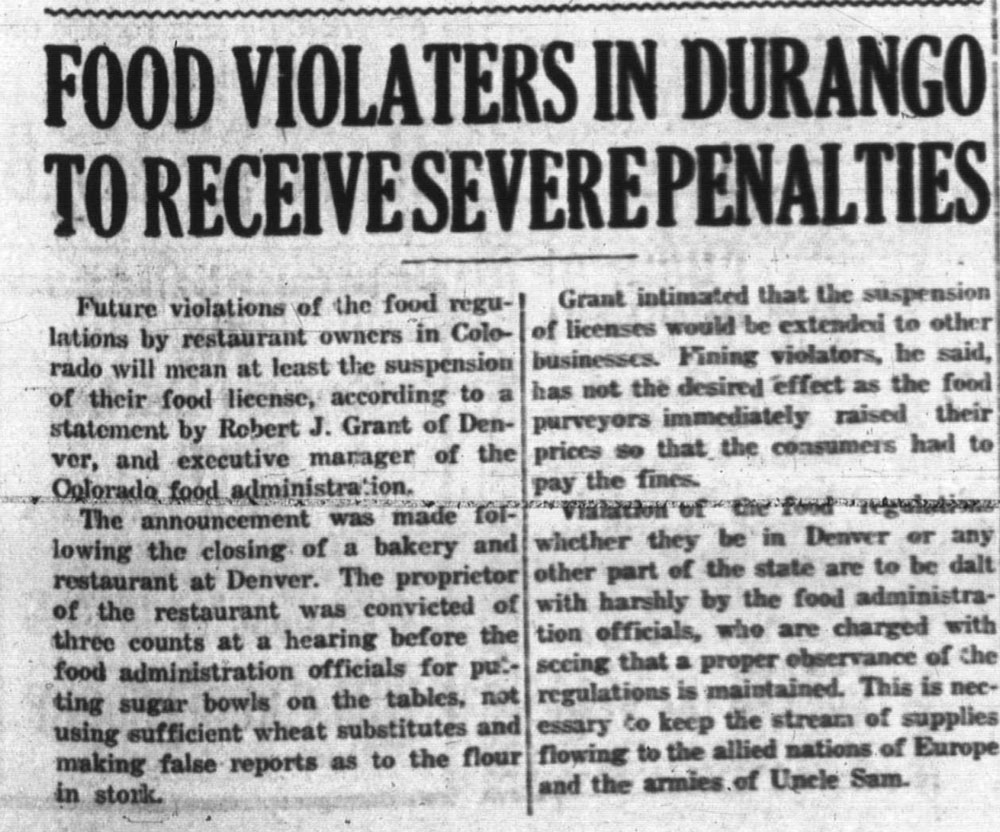
Americans were also urged to reduce wheat consumption by substituting other grains. The use of corn meal, rye and graham flour were encouraged and newspapers published tables listing the equivalent measurements for replacing wheat flour in recipes. Graden’s Mercantile in Durango featured a window display of corn products available to the patriotic housewife.
Women were encouraged to sign the food pledge and post a card in their window showing their support. The pledge campaign reminded the public, “Food will win the war. The more you save the more your country can send to our boys and our allies at the Front…They need sugar, meat and wheat.” Families were urged to “Abandon food prejudices – Don’t be finicky – be willing to try new food – cook food properly – remove from your vocabulary ‘don’t like’ and ‘can’t eat’ – demonstrate thrift in the home”
To help patriots adhere to these voluntary restrictions newspapers encouraged posting the “rules” in the kitchen and frequently printed helpful recipes and “Loyalty Menus”. Download some authentic WWI era recipes here.
Conservation was only one aspect of the wartime food program. Increasing production was also important. Farmers were encouraged to plant as much as possible. City dwellers were urged to plant gardens on any available land, with the Garden Commission’s goal of three times as many gardens as in previous years. In Durango, Mr. Kellenberger offered free use of his two lots in Brookside for War Gardens.
Voluntary food conservation and increased production was successful. As early as July 1917 headlines announced, “America Saves England from Short Rations”. Throughout the war the residents of La Plata County responded with a spirit of shared sacrifice, proudly contributing to the Allied victory.