

Constitutional Arguments and Women's Voting Rights
Many educated white women became outraged when the 15th Amendment granted Black men the vote first. Suffragists split into two factions: one pursued a new constitutional amendment while the other accepted the 15th Amendment, but thought changing laws state by state was the better course.
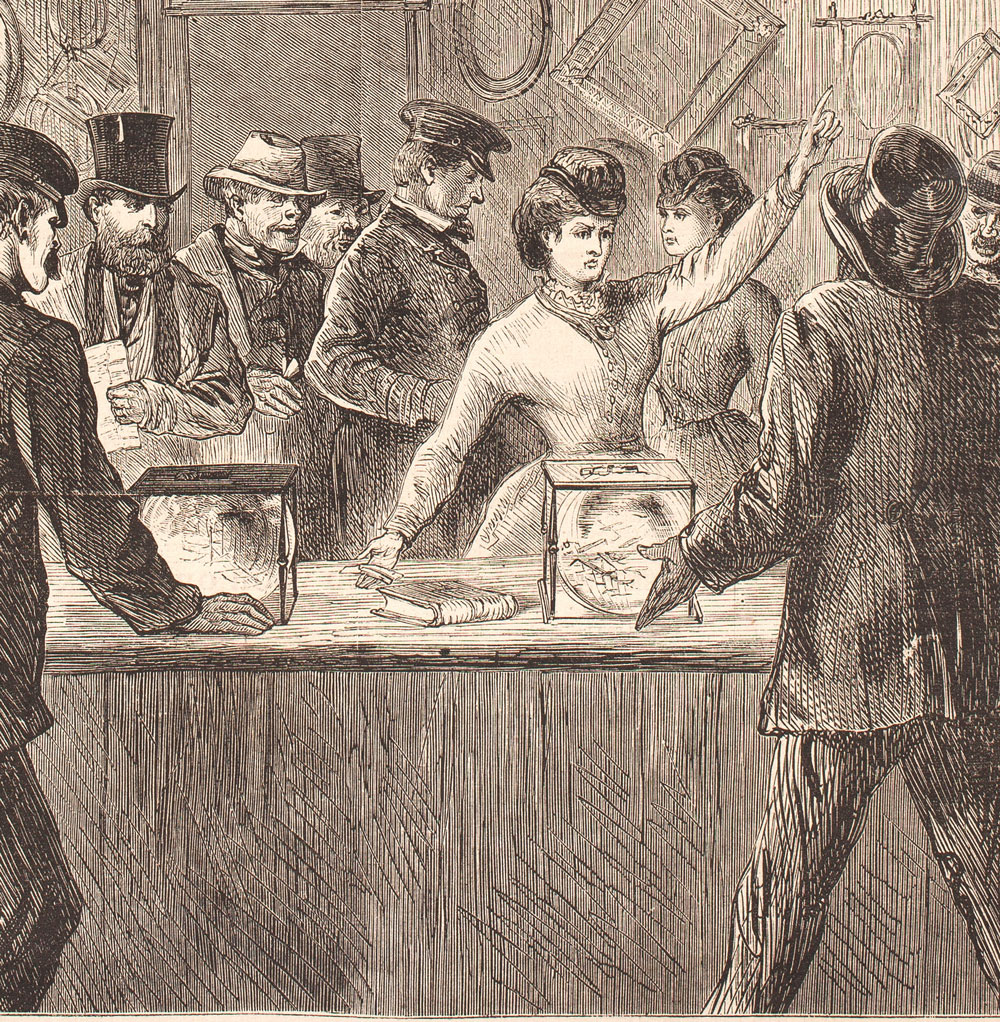
Those who wanted a new amendment acted on the fact that the 14th Amendment established anyone born in the United States was a citizen. They went to the polls claiming, as citizens, they already possessed the ballot--which they would argue in court. In 1874 the Supreme Court ruled that, according to the 15th Amendment, voting is not a right of citizenship, but a privilege accorded by states' laws--and dealt the movement a severe blow.
Top image:
Mrs. Woodhull Asserting her Right to Vote, 1871 Claiming her rights through the 14th Amendment, Victoria Woodhull (1838-1927) attempted to cast a vote in the 1871 congressional elections. In 1872 she ran for president as the candidate of the Equal Rights Party, naming Frederick Douglass as her running mate. Wood engraving, from Harper's Weekly, November 25, 1871 Courtesy of Robert P.J. Conney Jr.
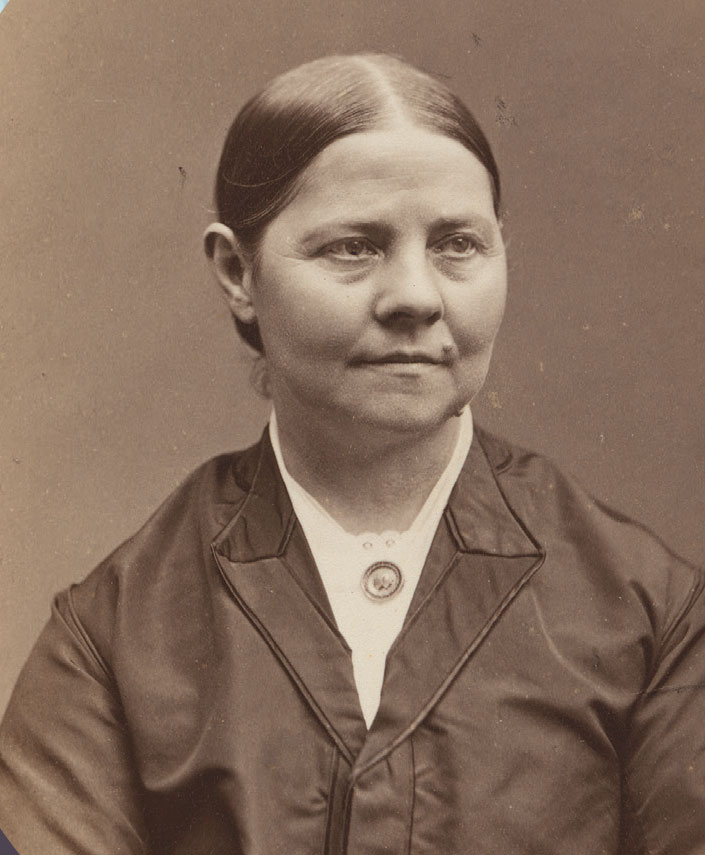
Lucy Stone (1818-1893) led the American Woman Suffrage Association. A longtime abolitionist and suffragist, she supported the 15th Amendment and advocated a plan to win voting rights by changing state constitutions, one by one. Albumen silver print by Sumner Bradley Heald, c. 1866 Courtesy of National Portrait Gallery, Smithsonian Institution
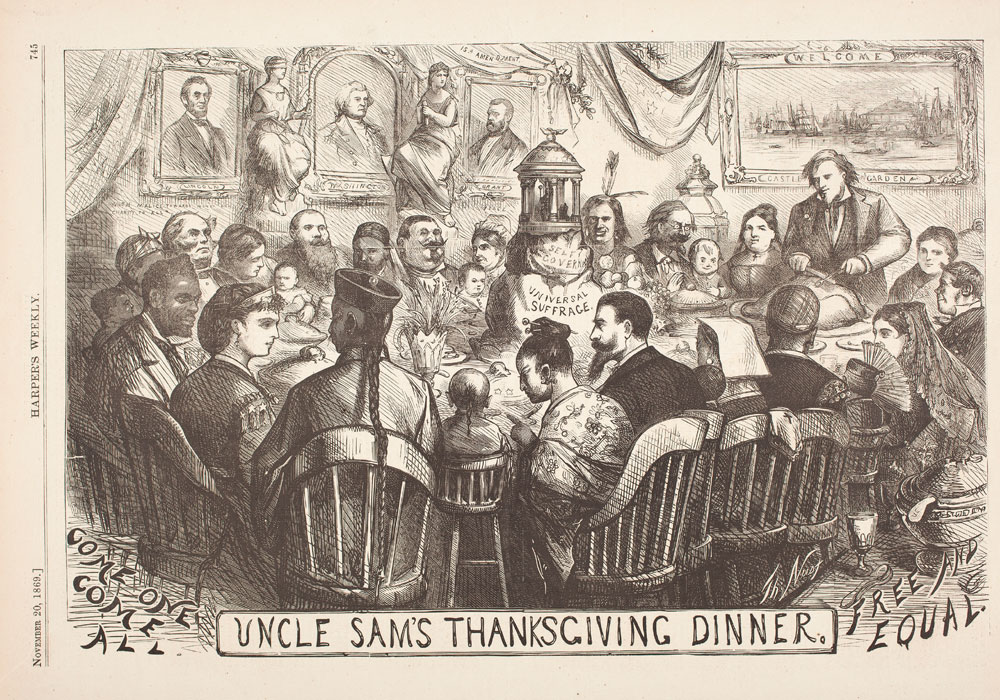
Uncle Sam's Thanksgiving Dinner, 1869 In this cartoon by Thomas Nast, Uncle Sam serves food to his multiethnic guests--mostly immigrants--gathered around his table. Reflecting on the 15th Amendment, Nast created a vision of hope for the future, with dignified men and women gathered around a centerpiece labeled "Universal Suffrage." Wood engraving from Harper's Weekly, November 20, 1869 Courtesy of Robert P.J. Cooney Jr.
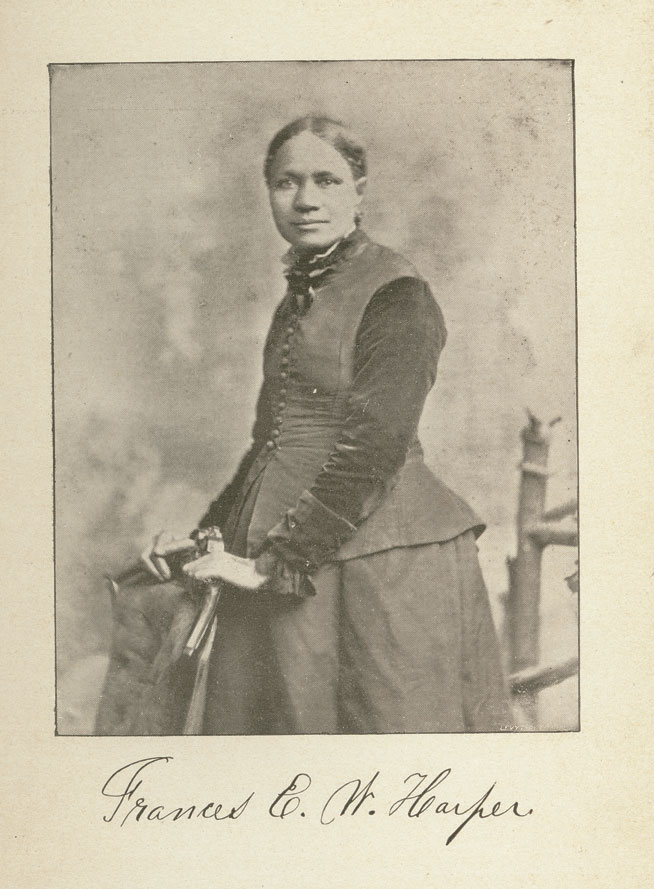
Frances Ellen Watkins Harper Writer and suffragist Frances Ellen Harper (1825-1911) addressed racism within the suffrage movement. In remarks to the 1866 American Equal Rights Association, she said: "I do not believe that giving the woman the ballot is immediately going to cure all the ills of this life. I do not believe that white women are dew-drops just exhaled from the skies. I think that like men they may be divided into three classes, the good, the bad, and the indifferent." Photograph from Atlanta Offering: Poems by Frances Ellen Watkins Harper, 1895 Courtesy of Stuart A. Rose Manuscript Archives, and Rare Book Library, Emory University
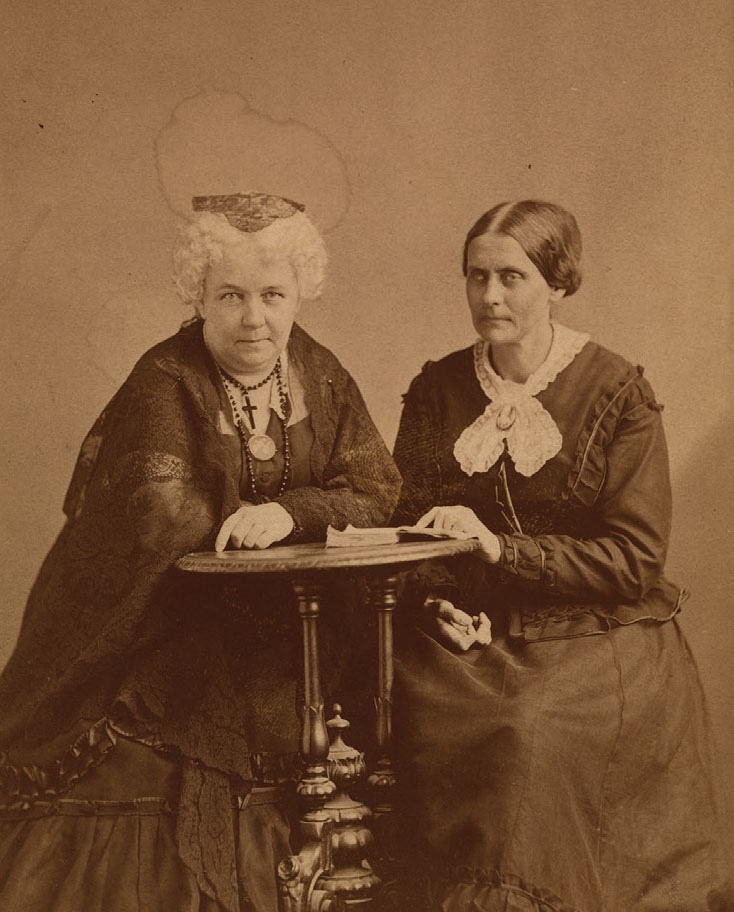
Elizabeth Cady Stanton (left; 1815-1902) and Susan B. Anthony (1820-1906) led the National Woman Suffrage Association, which opposed Black men voting before educated white women, and sought women's voting rights through a constitutional amendment. Albumen silver print by Napoleon Sarony, c. 1870 Courtesy of National Portrait Gallery, Smithsonian Institution